
Hip & Knee Pain · London Colney, St Albans · Founded 2001

Hip or knee pain
slowing you down?
Let’s find out what’s actually causing it.

Hip and knee pain rarely starts in the joint itself. It is usually the result of muscle imbalance, poor movement patterns, or compensations built up over years. At The Sogunro Practice in London Colney, we identify the actual cause first — then build a programme around it using Applied Pilates and Osteolates Therapy. Ample free parking on site. 2 minutes from M25 J22.

Hip & knee specialist St Albans STOTT Pilates® certified Osteolates Therapy 25 years professional Free parking · M25 J22 Founded 2001
£85
Movement assessmentIdentifies what is actually driving your hip or knee pain
2
Joints, one kinetic chainHip & knee pain are frequently linked through pelvic alignment and gait
4–6
Sessions to meaningful changeMost clients notice improvement once the actual cause is addressed
Free
Parking on siteLondon Colney · 2 min M25 J22 · Directions →

"The joint that hurts is rarely the joint that’s broken. It’s usually the one taking the strain for somewhere else in the chain that isn’t working properly."

Teejay’s Approach

Understanding the cause

Why hip & knee pain
often doesn’t resolve.

Hip and knee pain are among the most common reasons clients come to The Sogunro Practice in St Albans. However, the joint itself is rarely the true source. The pain is usually a downstream effect of how the whole kinetic chain works together — hip, knee, ankle and pelvis.

Treating the joint in isolation, without addressing the surrounding muscle imbalance, typically provides only temporary relief. Weak glutes, tight hip flexors, or poor pelvic control frequently place excessive load on the knee — the knee takes the blame for a problem that started higher up.

"The joint that hurts is rarely the joint that’s broken. Find what’s actually driving the pain, and the joint usually settles on its own."

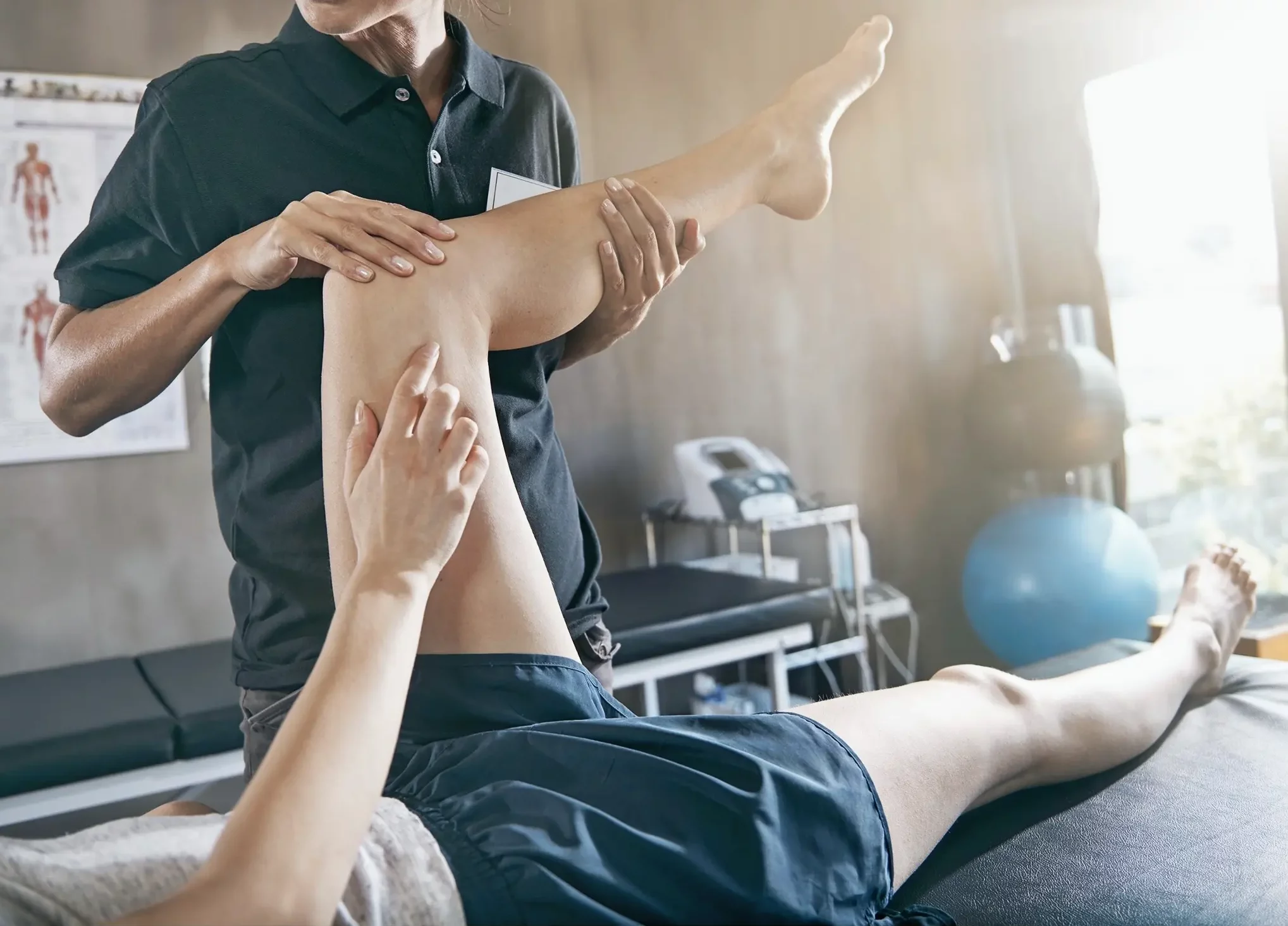
Every new client starts with a thorough movement assessment. We understand exactly how your hip, knee, and the rest of your kinetic chain are working together before any exercise is prescribed.

Back pain & all conditions
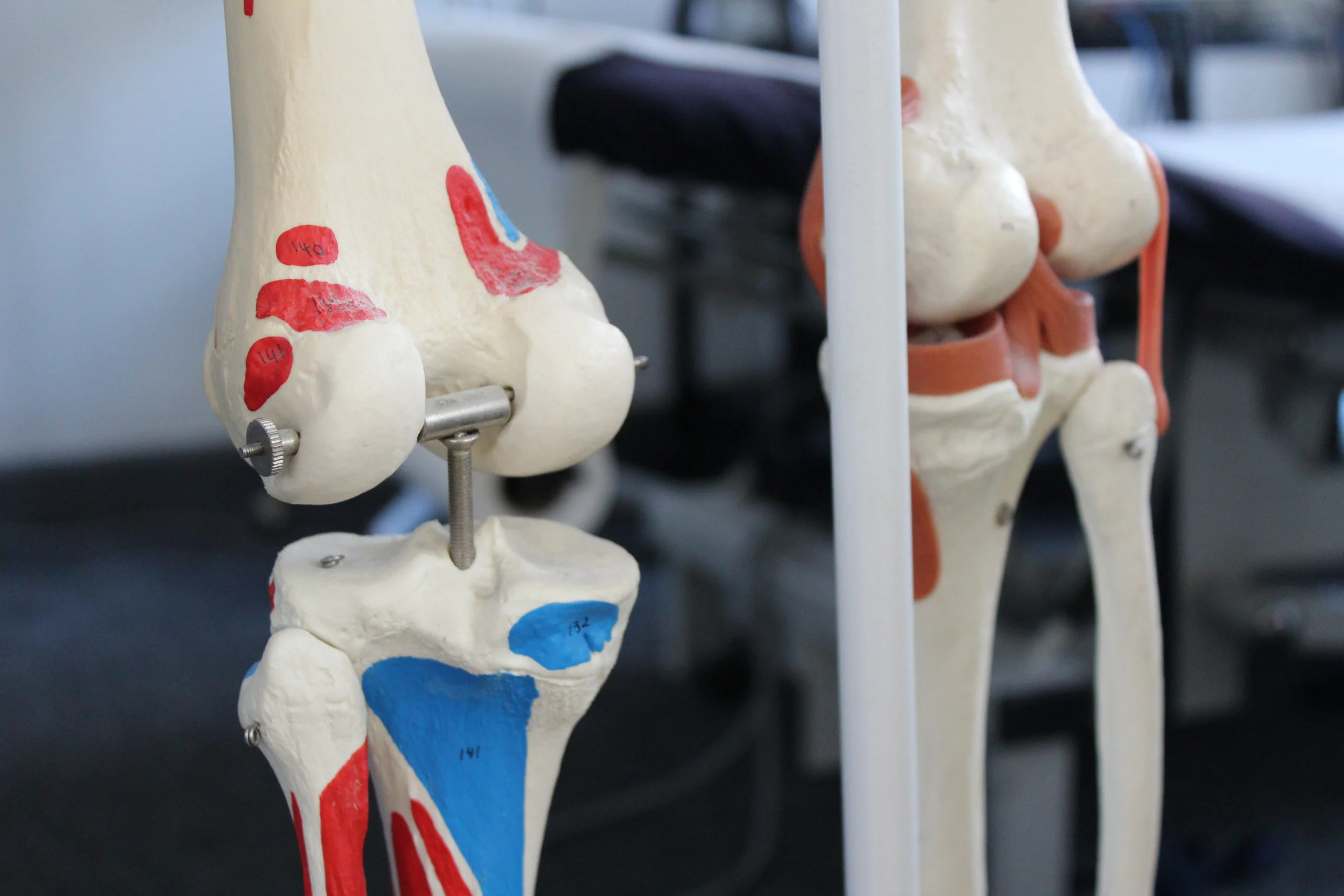
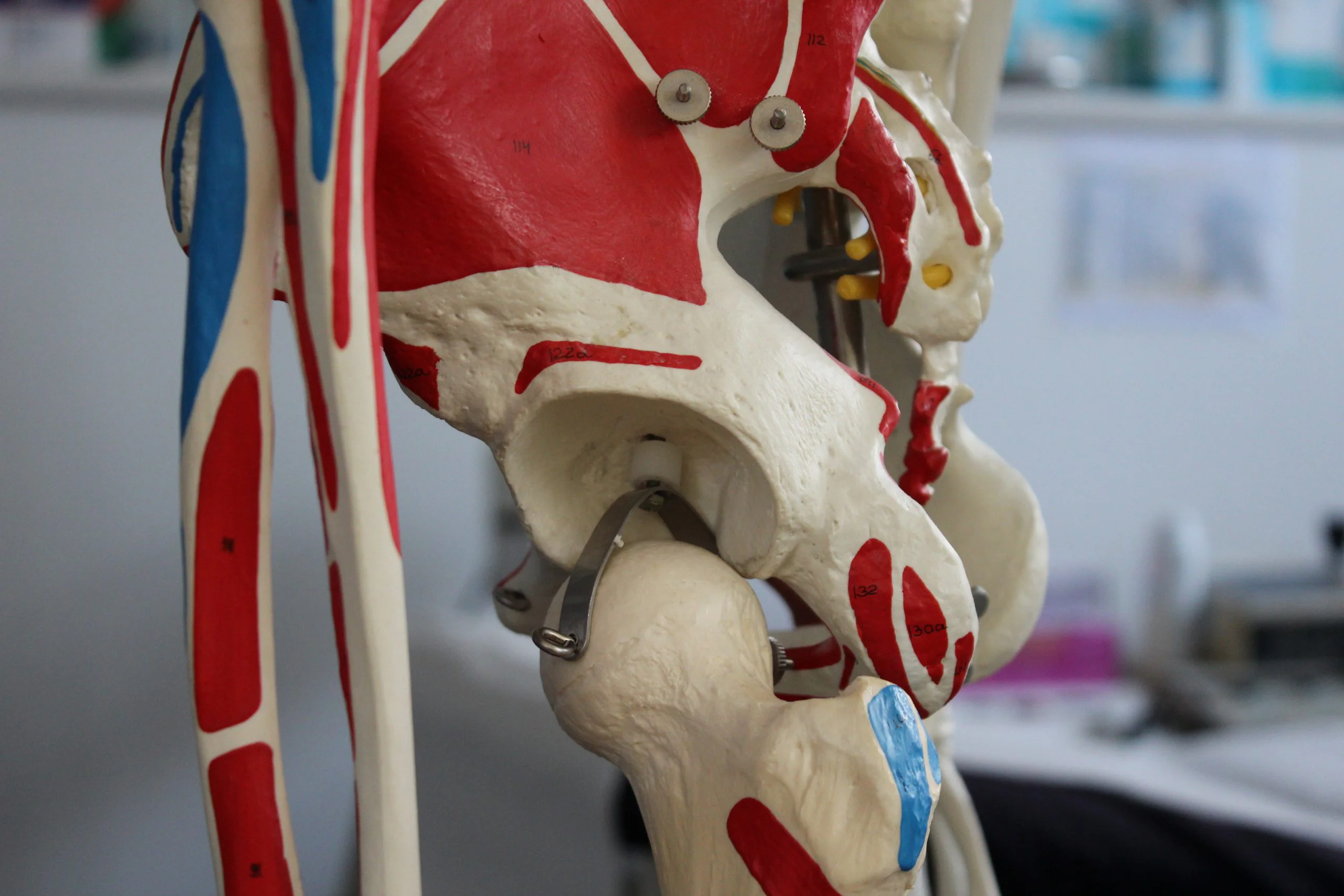
Knee joint anatomy model showing the joint structures relevant to knee pain treatment at The Sogunro Practice, London Colney, St Albans — Applied Pilates and Osteolates Therapy for joint pain rehabilitation.

Knee joint structures — Osteolates Sports Therapy & Applied Pilates for joint pain, The Sogunro Practice, London Colney, St Albans.

Pre- & post-surgical rehabilitation — for clients awaiting or recovering from hip or knee replacement, structured preparation matters. Careful sequencing before and after surgery significantly improves outcomes. Full post-surgery rehab guide →

Common causes

Four causes of hip & knee pain —
each requiring a different approach.

Each cause shapes how the condition is managed — which is why a thorough assessment matters before any treatment plan begins.

Most common
Muscle imbalance
Weak glutes and tight hip flexors place excessive load on the hip and knee joints, particularly during walking and stairs. The most common driver of joint pain that has not responded to previous treatment.
Structural
Pelvic & gait dysfunction
Poor pelvic alignment or an altered walking pattern transferring excessive strain to the hip or knee joint. Often develops gradually as a compensation for weakness elsewhere in the chain.
Wear & tear
Osteoarthritis
Degenerative joint changes causing stiffness and pain, particularly after rest or first thing in the morning. The Reformer’s adjustable spring resistance allows safe, progressive loading within tolerance. Osteoarthritis page →
Post-surgical
Joint replacement recovery
Pre- and post-surgical rehabilitation following hip or knee replacement, requiring carefully sequenced progression. Teejay works alongside surgeon and physio referrals where appropriate. Post-surgery rehab →

What we treat

Hip pain & knee pain —
related but distinct conditions.

Hip and knee pain are frequently linked through the kinetic chain. However, each joint has its own typical presentations — understanding which structures are involved shapes how your programme is built.

The hip-knee kinetic chain — how pain in one joint drives pain in the other
Hip-knee kinetic chain — how muscle imbalance drives joint pain Simplified skeletal diagram showing the pelvis, hip joint, femur and knee joint. Annotations show weak gluteal muscles on the left and tight hip flexors on the right, with arrows indicating how this drives poor pelvic alignment and excessive knee loading. Applied Pilates and Osteolates targets shown at each point. Pelvis Pelvic tilt = altered loading Hip joint Hip joint Knee pain Knee joint WEAK glutes Cannot stabilise hip/pelvis → knee absorbs load TIGHT hip flexors Pull pelvis into anterior tilt → altered knee tracking Applied Pilates targets these imbalances Assessment first — then cause-specific exercise for hip, knee and the whole chain

The hip-knee kinetic chain: weak glutes fail to stabilise the pelvis and hip, forcing the knee to absorb load it was not designed to bear. Tight hip flexors pull the pelvis into anterior tilt, altering knee tracking further. Applied Pilates addresses both imbalances directly — reducing joint load without the impact of conventional gym exercise.

Hip conditions we treat
  • Hip osteoarthritis
  • Hip impingement (FAI)
  • Gluteal tendinopathy
  • Hip bursitis
  • Pre- & post-hip replacement rehabilitation
  • Labral tears (non-surgical management)
Hip instability linked to hypermobility →
Knee conditions we treat
  • Knee osteoarthritis
  • Patellofemoral pain syndrome
  • ACL & ligament rehabilitation
  • Meniscus-related pain (non-surgical)
  • Pre- & post-knee replacement rehabilitation
  • Runner’s knee & overuse injuries
Knee instability linked to hypermobility →

Please note: Teejay Sogunro is not a physiotherapist, osteopath, or chiropractor. Applied Pilates and Osteolates Therapy are movement-based rehabilitation services. If you are under active medical care, please consult your GP before booking.

Recognising the pattern

Symptoms you may
be experiencing.

Symptoms vary depending on the underlying cause and which structures are involved. Most clients experience some combination of the following.

  • Pain worse with stairs or standing from sitting
  • Clicking, grinding or catching in the joint
  • Swelling around the knee or hip
  • A feeling of instability or the knee “giving way”
  • Stiffness after rest or first thing in the morning
  • Pain radiating into the groin or down the thigh
  • Reduced range of movement
  • Pain that limits walking distance
Pain present for months despite rest, painkillers or generic exercise is one of the most common reasons clients come to us. The cause, not the symptom, is where we start.

The critical distinction

Why generic exercise
often makes it worse.

Hip and knee pain rarely responds well to generic exercise. In particular, exercising the wrong muscles in the wrong order can increase joint load rather than reduce it.

High-impact exercise too early

Running or jumping before the supporting musculature is strong enough increases joint loading and can accelerate degeneration.

Strengthening the wrong muscles

Generic leg exercises often overload already-dominant muscles while leaving the true weak link — frequently the glutes — undertrained.

Ignoring the kinetic chain

Treating the hip or knee in isolation, without considering the ankle, pelvis and core, frequently leads to recurring or unresolved pain.

How Osteolates Therapy helps joint pain

The treatment pathway

A structured approach to
hip & knee pain.

Hip and knee pain rarely responds well to a single technique. With the right combination at each stage, most clients achieve significant and lasting improvement.

01
Acute phase
Pain relief & tissue preparation
Osteolates soft tissue treatment reduces pain and muscular guarding, improves circulation and restores tissue quality in compensating structures. The joint is prepared safely for the next stage. No high-load exercises are introduced at this stage — the sequence matters as much as the treatment.
About Osteolates Therapy
02
Rehabilitation phase
Targeted strengthening — cause-specific
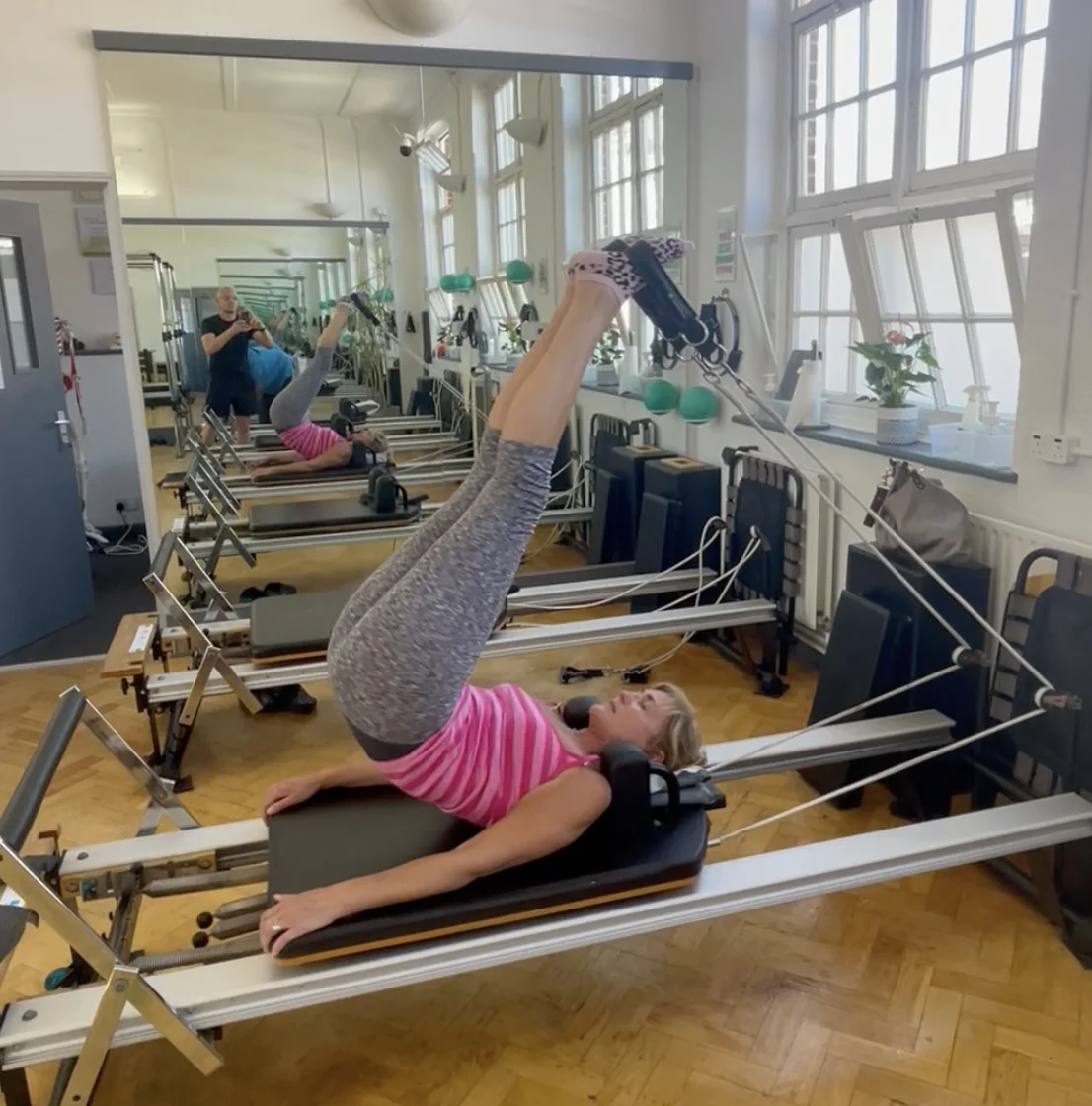
Applied Pilates targets the specific weak links identified in your assessment — most commonly the glutes, deep hip rotators, and core stability. The full STOTT apparatus allows precise, low-impact loading that a standard gym programme cannot replicate, and resistance is adjusted in small increments as tolerance improves.
Full apparatus studio
03
Progressive phase
Building resilience & preventing recurrence
As strength and control improve, the programme progresses towards your specific goals — walking without pain, returning to sport, or recovering from joint replacement surgery. Most clients transition to small group membership to maintain progress long term. Maximum 7 clients per session throughout.
View membership options
Why the full apparatus matters — the Reformer and Cadillac allow resistance to be precisely adjusted, so strengthening begins earlier and more safely than conventional rehabilitation exercise. Full apparatus studio →
Pre- & post-surgical rehabilitation — structured preparation before surgery and carefully sequenced rehabilitation afterwards both significantly improve outcomes. Post-surgery rehab →

Client results

What St Albans clients say
about joint pain relief.

★★★★★ Google Reviews · 4.9 from 117 reviews · London Colney, St Albans
★★★★★
Hip pain
“I had years of flare-ups that nobody could explain. Teejay finally helped me understand why it kept happening — and gave me a plan that actually addressed the cause, not just the pain.”

— Susan Piersse · Redbourn

★★★★★
10 years attending
“I have been going to The Sogunro Practice for the past 10 years, doing Applied Pilates twice a week. It makes a huge difference to my overall health, strength and balance.”

— Penny H. · St Albans

★★★★★
Post knee surgery
“After six sessions with Teejay I finally understood what was actually happening in my body. Nobody had explained it like that before — not the physio, not the osteopath, not the chiropractor.”

— Marion Kirby · Watford

Getting started

Three steps to lasting relief.

Every client begins the same way — with an honest assessment of what is actually driving the pain. Everything follows from there.

01
Movement Assessment
£85
60 min 1-to-1 with Teejay. We assess your hip, knee, pelvis and gait to identify the root cause of your pain. No generic advice. No obligation to continue.
Book assessment →
02
Osteolates + 1-to-1 Sessions
From £79.83
Osteolates soft tissue treatment alongside personalised 1-to-1 Applied Pilates, building strength and control progressively and safely. First block includes complimentary Osteolates Express (£65 value).
View prices →
03
Small Group Membership
From £129/mo
Once stability and strength are established, small group membership maintains progress long term. Maximum 7 clients. No lock-in. Essential £129/month · Premium £219/month.
View timetable →

Why trust Teejay Sogunro with your hip or knee pain

STOTT PILATES® Full Comprehensive Certified STOTT PILATES® Rehabilitation Certified Qualified Sports Therapist Trigger Point Dry Needling Studied BSc (Hons) Osteopathy — Middlesex University YMCA Qualified Fitness Professional Registered Healthcare Practitioner — CNHC & CThA 25 years professional practice · Founded 2001
View full credentials and professional background

Common questions

Questions about hip & knee
pain treatment in St Albans

  • The hip, knee and ankle work together as part of a kinetic chain. If the hip is weak or poorly aligned, it changes how load passes through the knee during walking or stairs. The knee becomes painful even though the underlying problem started at the hip. This is why the £85 movement assessment looks beyond just the painful joint and assesses how the whole chain is working.
  • Yes. The Reformer’s spring resistance can be adjusted precisely, which is particularly valuable for osteoarthritis — exercises work with the joint rather than against it, and can be modified as tolerance changes. This is significantly more appropriate than conventional gym exercise. Osteoarthritis & osteoporosis page → Full apparatus studio →
  • Yes. Structured preparation before surgery and carefully sequenced rehabilitation afterwards both significantly improve outcomes. Teejay works alongside surgeon and physio referrals where appropriate to build a programme suited to your specific stage of recovery. Full post-surgery rehabilitation page →
  • Many clients notice improvement within 4–6 sessions once the actual cause has been identified and addressed. Long-standing or structural issues such as significant osteoarthritis may take longer, but improvement in function and pain levels is achievable in most cases. The improvement is lasting because the root cause is being addressed — not just the symptom.
  • All new clients start with the £85 movement assessment. After that, Osteolates Therapy sessions are from £65, 1-to-1 Applied Pilates from £79.83 per session on the 3-session block, and monthly group membership from £129 per month. Full prices and membership options →
  • Unit 5, Hertfordshire Business Centre, Alexander Road, London Colney, St Albans, AL2 1JG. Ample free parking on site. 2 minutes from M25 junction 22. Approximately 10 minutes from St Albans, Radlett, Hatfield and Harpenden. Map and full directions →
Find out what’s really behind your joint pain

Find out what’s
really driving your pain.

Your £85 movement assessment is a 60-minute 1-to-1 with Teejay. He’ll assess your hip, knee, pelvis and gait, explain what he finds, and give you a clear, honest plan. No generic advice. No obligation to continue. Ample free parking on site.

Book Your £85 Assessment
Or call Teejay directly 07734 578959

info@thesogunropractice.co.uk

The Sogunro Practice · Applied Pilates & Osteolates Therapy
Unit 5, Hertfordshire Business Centre, Alexander Road
London Colney · St Albans · Hertfordshire · AL2 1JG · Free parking on site

Teejay Sogunro is not a physiotherapist, osteopath, or chiropractor. Applied Pilates, Reformer Pilates and Osteolates Therapy are movement-based and sports therapy rehabilitation services.

>