
Back & neck problems — a major UK health crisis. The appropriate exercise doesn’t just strengthen tissue. It changes pain.
Britain is facing a major musculoskeletal health crisis. Almost a million people are too sick to work because of back or neck problems. The welfare bill for back conditions has tripled in two decades. And the standard response — rest, painkillers, waiting — is the opposite of what the evidence now recommends.
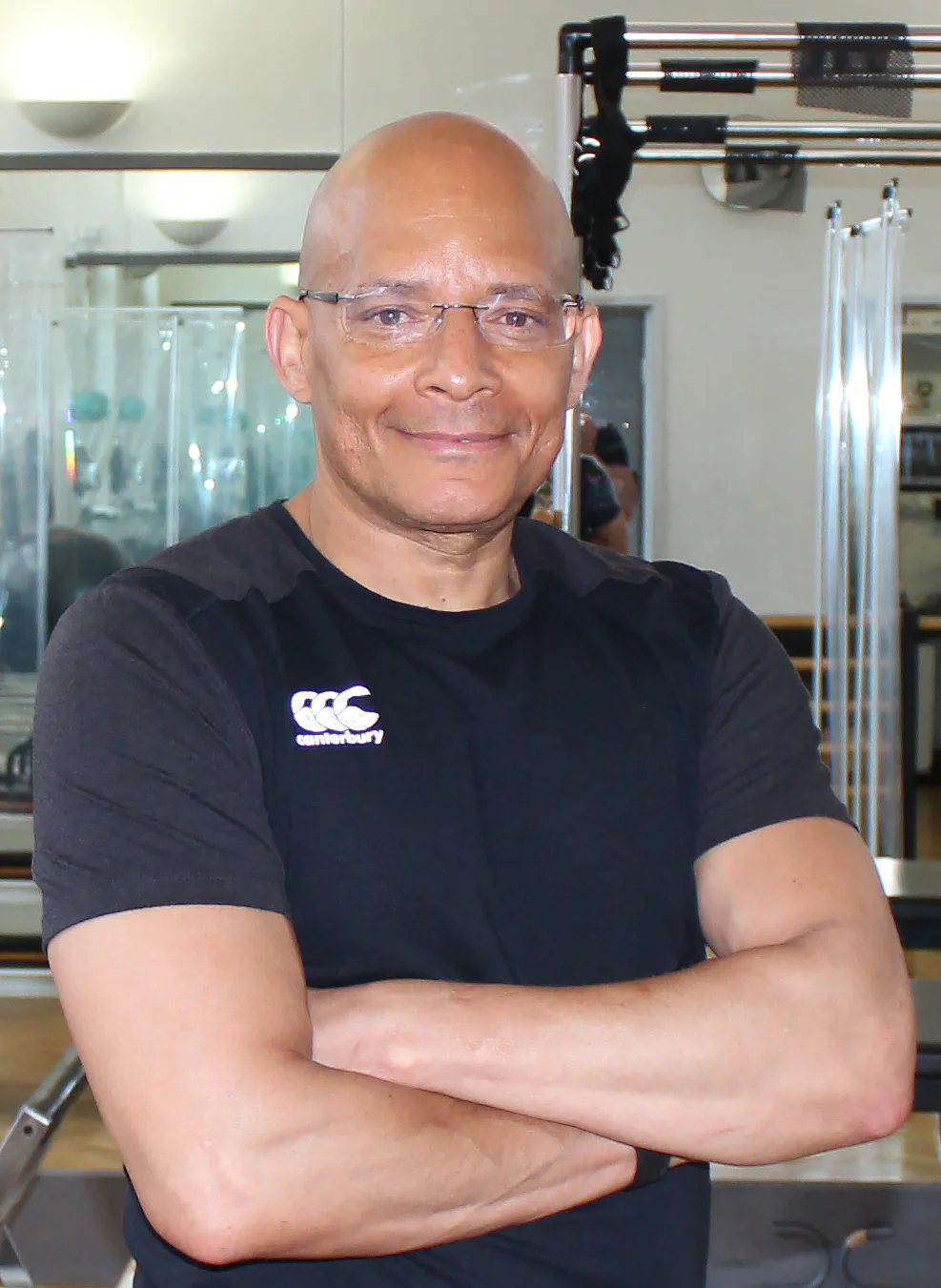
Teejay Sogunro
Founder, The Sogunro Practice · Applied Pilates & Osteolates Therapy · Published 20 Jun 2025 · Updated 27 Jul 2026 · 6 min read
Applied Pilates clinical rehabilitation for back pain — The Sogunro Practice, London Colney, St Albans.
The scale of the problem
Britain’s back and neck crisis — the numbers that tell the story.
Back and neck pain has become one of the most significant public health crises in the United Kingdom — not in the sense of a sudden emergency, but in the grinding, cumulative sense of a problem that has grown steadily for decades while responses have lagged far behind.
The scale is no longer deniable. The cost to individuals, employers and the NHS is measurable and documented. What has changed in recent years is the evidence base for what to do about it — and that evidence points clearly away from rest, imaging and passive treatment, and towards the right kind of exercise-based rehabilitation.
Health Survey for England 2024: 26% of adults reported chronic pain, with musculoskeletal conditions — especially back and neck pain — accounting for the largest share. 13% reported high-impact chronic pain limiting daily activities.
HSE 2024/25: Work-related musculoskeletal disorders caused 7.1 million lost working days. Back injuries account for 43% of all work-related MSD cases in Great Britain.
Office for Health Improvement and Disparities, 2025: 17.9% of adults in England live with a long-term musculoskeletal condition, including back pain.
British Pain Society: Chronic pain costs the UK economy £40–50 billion annually in lost productivity, absenteeism and disability benefits — equivalent to nearly 2% of GDP.
Why it’s getting worse
Sedentary work, remote working and an ageing workforce are driving the rise.
Chronic back pain is no longer primarily a condition of older workers or heavy manual labour. It is increasingly common among people in their 30s and 40s — driven by sedentary desk work, prolonged sitting, poor home-working ergonomics and reduced physical activity in working hours.
The remote working effect
The shift to widespread remote and hybrid working since 2020 has had a measurable effect on MSK health. Research from the Institute of Employment Studies found a significant increase in musculoskeletal complaints among people working from home, with more than half of those surveyed reporting new aches and pains: 58% in the neck, 56% in the shoulder, and 55% in the back. As many as 7 in 10 Brits working from home reported experiencing more aches and pains.
A study in the International Journal of Environmental Research and Public Health found that 41.2% of remote workers reported lower back pain and 23.5% reported neck pain — with 50% reporting their neck pain had worsened since starting remote work. The mechanism is consistent: prolonged sitting in non-ergonomic setups, no commute movement, and a collapse of the incidental physical activity that office environments impose.
The ageing workforce multiplier
MSK conditions affect all ages, but their prevalence increases with age. By 2030, it is predicted that nearly 40% of UK workers over 50 will have a long-term MSK condition (ONS projections). With the UK workforce ageing and state pension age rising, the intersection of older workers with higher MSK prevalence and longer working lives creates a compounding problem.
Research from the Office for Health Improvement and Disparities (2025) confirms that prolonged sedentary time — exceeding six hours of daily sitting — is associated with a 33% higher risk of chronic back pain. Harvard Health guidance (2025) confirms that moving more and sitting less may help prevent worsening back pain. The structural change needed is in how movement is built into working life — not just in treatment after pain has developed.
What the evidence says
Rest and imaging are not the answer. Appropriate exercise is.
The clinical consensus on back pain management has shifted significantly over the past decade. NICE guidelines for low back pain now recommend exercise as a first-line treatment. Routine imaging — X-rays and MRI scans for non-specific back pain — is actively discouraged in guidelines as it frequently identifies incidental findings that do not explain or predict pain.
A 2025 audit of NICE guideline adherence in primary care (published in Cureus) found inconsistent adherence to exercise recommendations, with many patients still receiving passive care or investigation before being directed to rehabilitation. This gap between guideline evidence and practice is part of what sustains the crisis.
“The appropriate exercise doesn’t just strengthen tissue. It improves posture and changes pain.”
This distinction matters enormously. The older model of back pain rehabilitation focused on strengthening the muscles around an injured structure — essentially treating tissue weakness as the cause. The contemporary understanding is more complex: pain is influenced by neuromuscular patterns, movement avoidance, load intolerance and proprioceptive deficits as much as by structural tissue damage. Appropriate exercise addresses all of these simultaneously. Passive treatments address none of them.
Patti et al., Disability & Rehabilitation, Aug 2024 (systematic review and meta-analysis): Pilates provides clinically meaningful improvements in both pain and disability compared to minimal interventions. One of the most comprehensive and recent reviews of Pilates specifically for low back pain.
Network meta-analysis of mind-body exercise for chronic non-specific LBP (36 RCTs, N=3,050): Pilates ranked highest for both pain reduction (SUCRA = 86.6%) and functional improvement (SUCRA = 98.4%) among all exercise modalities tested, including yoga, Tai Chi and Qigong.
Systematic review and meta-analysis, core training approaches (May 2025): Comprehensive comparison of Pilates training, core stability training and core resistance training for chronic non-specific LBP found Pilates among the most effective core-based approaches for both pain intensity and functional outcomes.
PMC 2025 (RCT, Istanbul Beykent University): An 8-week Pilates programme compared to home exercise in subacute LBP found greater improvements in the Pilates group, attributed to its emphasis on core stabilisation, neuromuscular re-education and movement control.
NHS Pilates for back pain: The NHS recommends Pilates as an appropriate exercise for back pain sufferers, with guidance available through the NHS Fitness Studio. Clinical review: August 2025.
The Applied Pilates approach
Why generic exercise advice falls short — and what Applied Pilates does instead.
The research supports exercise for back and neck pain. But “exercise” is not a single thing. A generic class attended with 20 other people, each with different conditions and movement patterns, cannot safely prescribe appropriately for everyone simultaneously. This is precisely why the evidence also shows that supervised, individually adapted exercise produces better outcomes than unsupervised home exercise or generic group programmes.
What assessment-first exercise looks like in practice
- ✓A 1-to-1 Movement Assessment that identifies the specific drivers of your pain — not a generic examination
- ✓Osteolates Therapy where acute muscle tension, restricted joints or scar tissue would prevent effective exercise
- ✓Applied Pilates on the full apparatus — Reformer, Cadillac, Stability Chair, Barrels — where load can be adjusted in precise increments
- ✓Maximum 7 clients per session so every person is observed and corrected in real time
- ✓Progressive loading that builds strength and neuromuscular control simultaneously, rather than training strength alone
- ✓Long-term maintenance through small group membership once the acute phase has resolved
The 25 years of clinical practice at The Sogunro Practice has been spent working with exactly this population — people with back and neck pain who have frequently tried other approaches first and found them insufficient. Many of those clients have been attending for 10–14 years. That continuity is not accidental. Applied Pilates addresses the underlying cause rather than managing the symptom.
From clinical practice
What I see in clinic confirms what the research shows — but the gap between knowing and doing remains significant.
Most clients arrive having already navigated a long and frustrating journey. They have rested. They have had imaging. They may have had a course of manual therapy that helped temporarily. They may have been told their scan shows “wear and tear” or a disc bulge, as if that explains and exhausts the problem. Frequently, the imaging findings are incidental and do not predict their pain at all.
What has not been addressed, in most cases, is their movement. The patterns that are loading the spine inappropriately. The muscle imbalances that developed over years of sedentary work or compensatory movement. The fear of moving that accumulated after an injury and made those patterns worse. These are things that exercise addresses — but only exercise that is carefully calibrated to the individual’s specific presentation.
The NHS orthopaedic waiting list is 750,000 people long. For many people with back and neck pain, appropriate exercise-based rehabilitation now — not in 18 months after a surgical consultation — is both the most evidence-based and the most practical response to the crisis their body is experiencing.
About the author
Teejay Sogunro
Founder, The Sogunro Practice · Applied Pilates & Osteolates Therapy, London Colney, St Albans
STOTT Pilates Full Comprehensive and Rehabilitation certified. Qualified Sports Therapist. Certified Physio Club Rehab Trainer & Master Rehab Trainer. Studied osteopathy, Middlesex University. Rehab Pilates Sports Therapist, Watford FC 2015–2018. England Masters squash representative, world ranked over-60s. Founder, The Sogunro Practice, 2001. Creator, Osteolates Therapy. 25 years professional clinical practice and 35 years total experience. Applied Pilates and Osteolates Therapy are movement-based rehabilitation services. This page is for informational purposes — consult your GP or specialist for medical advice.
Related condition pages & guides
Appropriate exercise now.
The £85 assessment is where it starts.
Teejay identifies what is specifically driving your back or neck pain — and builds a programme around it. Not a generic back class. A plan for your actual presentation. Free parking on site. 2 minutes from M25 J22.
The Sogunro Practice · Applied Pilates & Osteolates Therapy
Unit 5, Hertfordshire Business Centre, Alexander Road
London Colney · St Albans · Hertfordshire · AL2 1JG