Which type of Pilates is right for me? Classical, Fitness, Boutique, Clinical & Applied — what each style means for your body.
Over the years, four distinct styles of Pilates have evolved from the same source. They look similar from the outside. Inside, they are fundamentally different — in their approach to spinal alignment, their suitability for musculoskeletal conditions, and the training required to deliver them safely. This guide explains the differences clearly.
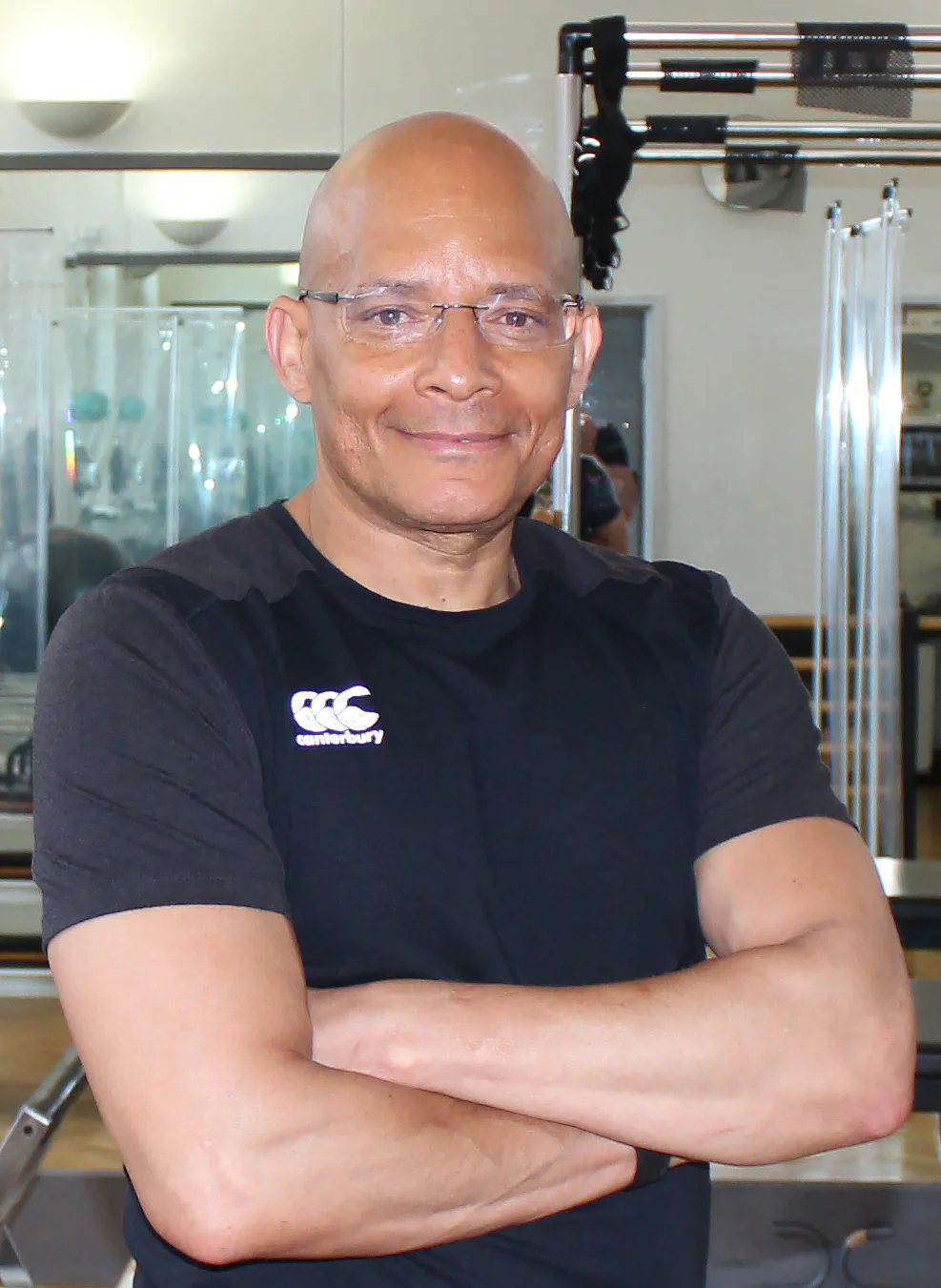
Teejay Sogunro
Founder, The Sogunro Practice · Applied Pilates & Osteolates Therapy · Published 19 Jul 2025 · Updated 27 Jul 2026 · 7 min read

The Sogunro Practice — full STOTT Pilates apparatus studio, London Colney, St Albans. Applied Pilates in small groups of maximum 7.
When a doctor or specialist tells you to “do Pilates,” they are almost never specifying which type. That distinction is left for the patient to work out — in a market where all four styles share the same name, use similar apparatus, and look broadly similar from the outside.
The differences between them are not stylistic preferences. For someone with a musculoskeletal condition, they are clinical distinctions that determine whether Pilates will help, do nothing, or actively make things worse. A substantial part of the classical Pilates repertoire involves deep spinal flexion, which is contraindicated in disc prolapse and can worsen symptoms. A fitness class running 20 clients simultaneously on Reformers cannot safely modify for each person’s individual presentation. Clinical Pilates is effective but largely inaccessible outside one-to-one physiotherapy.
Applied Pilates was developed to close that gap — bringing clinical standards into a small-group exercise environment, delivered by practitioners who understand musculoskeletal conditions.
Here is what you need to know about each style.
Classical Pilates
Classical Pilates is based on the original, unmodified teachings of Joseph Pilates — the method he called “Contrology” and developed in the early 20th century. It uses a fixed sequence of exercises, traditional choreography, and Joseph Pilates’ original approach to spinal alignment. It is the form most associated with professional dancers and is taught in its original sequence without modification.
The core clinical problem: Joseph Pilates’ own belief in creating and maintaining a flat spine — the “imprinted” or posterior pelvic tilt position that presses the lower back into the mat or apparatus — directly contradicts today’s medical and biomechanical evidence on spinal loading. Contemporary research and clinical consensus support the preservation of the spine’s natural curves during exercise, not their elimination.
Classical Pilates exercises that involve deep spinal flexion under load — including the Roll-Up, The Hundred in traditional position, Spine Stretch Forward and several Reformer exercises — create high compressive forces on spinal discs and joints. These exercises are contraindicated for anyone with a prolapsed disc, osteoporosis, or facet joint syndrome, and require significant modification for many other MSK presentations. A rigidly unmodified classical method cannot safely accommodate these modifications.
STOTT Pilates methodology (Merrithew): Classical Pilates emphasises an imprinted position, with the spine pressed low, focusing on posterior pelvic tilt. This differs fundamentally from the neutral spine position — the position that preserves the lumbar curve and places the least stress on discs, joints and ligaments — which is the foundational principle of contemporary evidence-based Pilates.
Osteoporosis contraindication: The primary fracture risk in osteoporosis is vertebral compression from loaded spinal flexion. Classical exercises including Roll-Up, Roll-Down, The Hundred (traditional), Spine Stretch Forward and several Reformer spring exercises are specifically contraindicated for anyone with osteoporosis or osteopenia, for this reason.
Disc pathology: A substantial part of the classical Pilates repertoire involves degrees of spinal flexion that increase intradiscal pressure — the opposite of what is clinically indicated for prolapsed or herniated discs. A classically trained instructor without additional MSK training will not have the framework to identify or modify these appropriately.
Note on dancers: Classical Pilates was developed for and by professional dancers — a population with unusual levels of spinal mobility, body awareness and muscular conditioning. Exercises appropriate for that population are not appropriate for the general MSK population.
Fitness Pilates
Fitness Pilates is a contemporary modification of the original method, anatomically-based in accordance with modern biomechanics. It moves away from the rigid classical sequencing and adopts a more flexible, varied approach to exercise selection. This is the predominant form found in fitness centres, large group matwork classes and the brand-name Reformer studios that have expanded rapidly across the UK.
Where it works: For generally healthy adults without significant MSK issues, Fitness Pilates in a well-managed class provides good core conditioning, flexibility work and postural awareness. The exercises are broadly safe for this population when taught by a competent instructor.
Where it fails: Three structural factors make Fitness Pilates high-risk for people with musculoskeletal conditions. First, class sizes — typically 15–20+ on Reformers — make individual observation and correction impossible. Second, the need for everyone to perform the same exercises simultaneously means that individual modification cannot be properly managed. Third, the emphasis on variety and engagement to maintain group interest competes directly with the focused biomechanical precision required for rehabilitation-level work. The result is an environment where MSK conditions frequently worsen rather than improve, despite the instructor’s best intentions.
A note on Lifestyle & Boutique Pilates events
A growing commercial offshoot sits within this category: evening classes built around wine or prosecco, curated low lighting, designer interiors, branded activewear drops, and a social event format. Studios marketing “prosecco Pilates,” atmospheric night classes and Pilates-and-brunch pop-ups are all variations on this model. The exercise format remains Fitness Pilates — the product being sold is the experience and the social occasion.
For an evening out with friends, this is exactly what it delivers. As rehabilitation for a musculoskeletal condition, the risks of Fitness Pilates apply — and are compounded. Low lighting reduces the instructor’s ability to observe movement quality across the room. Alcohol before or during exercise impairs proprioception — the body’s awareness of its own position in space — which is precisely the faculty that safe Reformer work depends on. The atmosphere takes precedence over movement attention in an environment specifically designed that way. For someone with a back condition, sciatica or joint instability, this is the environment least suited to their needs.
“Fitness Pilates, practised in group environments, can fail to deliver clients’ objectives due to the group sizes required to keep costs down, the need for everyone to perform the same exercises simultaneously, and the emphasis on number and variety of exercises to maintain group interest. All of these factors result in lost focus on basic biomechanical principles and make it high risk for those with musculoskeletal issues.”
The Sunday Times report of 16 June 2024 — “Reformer Pilates craze is stretching us to breaking point” — documented the direct consequences of this model at scale: a significant increase in injuries from large-group Reformer classes, with cases including tendon tears, fractures and slipped discs. EMD UK has since warned that, without the right checks, group Reformer “carries one of the highest injury risks of any class on the studio schedule.” Read the full large group classes article →
Clinical Pilates
Clinical Pilates was developed from the early 1990s by rehabilitation specialists — predominantly physiotherapists — who began incorporating Pilates exercises and equipment into their treatment protocols. Working with patients who had specific musculoskeletal presentations, they found the original exercises needed significant modification to align with established physiotherapy principles. The result was a clinically adapted form of Pilates, exercise-prescription-led and grounded in rehabilitation science.
The clinical evidence for this approach is strong. Research from the University of Queensland found that patients who learned to consciously co-activate the transversus abdominis before performing daily movements experienced significantly less pain recurrence over a 12-month period than those who received general physiotherapy alone. Pilates methodology closely mirrors this motor control approach. A 2024 systematic review in EXPLORE found the evidence for Pilates improving flexibility and dynamic balance was strong, and evidence for improving muscular endurance was moderate.
The primary limitation: Clinical Pilates is predominantly delivered in one-to-one physiotherapy settings. It is inaccessible to most people outside clinical or rehabilitation contexts — either because of cost, availability, or because physiotherapy-led Pilates sessions are not systematically available on the NHS for maintenance beyond the acute phase. Once a patient is discharged from physiotherapy, the Clinical Pilates programme typically ends.
Applied Pilates
Applied Pilates brings a clinically-modified form of Pilates into the exercise environment — offered in both one-to-one and small group formats. It takes the clinical rigour of the physiotherapy approach and makes it accessible as an ongoing exercise practice, delivered by practitioners who hold both Pilates certification and the MSK knowledge required to understand and work with specific conditions.
Exercise routines are tailored for each individual rather than standardised for the group. The practitioner understands the clinical nature of each client’s condition — what is happening in the body, which exercises are contraindicated, what a progressive programme looks like, and how to modify safely as the condition evolves. The full apparatus — Reformer, Cadillac, Stability Chair, Barrels — allows precise adjustment of load, range and resistance in a way that mat Pilates cannot replicate.
Crucially, Applied Pilates uses a neutral spine position as its foundational principle — the position that preserves the lumbar curve and places the least stress on discs, joints and ligaments. This is consistent with contemporary exercise science and directly contradicts classical Pilates’ imprinted spine approach.
At The Sogunro Practice: STOTT Pilates Full Comprehensive and Rehabilitation certified. Qualified Sports Therapist. Studied osteopathy background, Middlesex University. Max 7 clients per session. Every new client begins with a £85 1-to-1 Movement Assessment. Founded 2001 — 25 years professional clinical practice.
Side-by-side comparison
Four types of Pilates — the key distinctions.
Lifestyle & Boutique Pilates sits within Fitness Pilates.
Who Applied Pilates is for
Applied Pilates is the right answer in most of the situations where you’ve been told to “do Pilates.”
When a clinician recommends Pilates for back pain, sciatica, facet joint syndrome, hypermobility, osteoarthritis, post-surgery rehabilitation, sports injury recovery, or general musculoskeletal maintenance — they mean the clinically-adapted, individually-modified form. They do not mean a large group class where everyone performs the same exercises simultaneously.
Applied Pilates at The Sogunro Practice is also the right choice for men who want to supplement gym training with stabilisation work, over-60s maintaining mobility and balance, and anyone who has tried general fitness classes and found them either unhelpful or aggravating for their specific condition.
About the author
Teejay Sogunro
Founder, The Sogunro Practice · Applied Pilates & Osteolates Therapy, London Colney, St Albans
STOTT Pilates Full Comprehensive and Rehabilitation certified. Qualified Sports Therapist. Certified Physio Club Rehab Trainer & Master Rehab Trainer. Studied osteopathy, Middlesex University. Rehab Pilates Sports Therapist, Watford FC 2015–2018. England Masters squash representative, world ranked over-60s. Founded The Sogunro Practice 2001. Creator, Osteolates Therapy. 25 years professional clinical practice and 35 years total experience.
Related articles & condition guides
Start with the right type.
The £85 assessment is where it begins.
Every new client at The Sogunro Practice begins with a Movement Assessment. Teejay identifies your specific condition, what is driving it, and which exercises are appropriate — before any programme begins. Free parking on site. 2 minutes from M25 J22.
The Sogunro Practice · Applied Pilates & Osteolates Therapy
Unit 5, Hertfordshire Business Centre, Alexander Road
London Colney · St Albans · Hertfordshire · AL2 1JG