
Choose your Pilates studio wisely.
The questions to ask before you start — and what the answers tell you.
The Pilates industry is largely unregulated. Qualifications vary from a weekend course to years of clinical training. For someone with a musculoskeletal condition — which is most people who seek out Pilates — the difference between the right studio and the wrong one is the difference between recovery and a worsening injury.
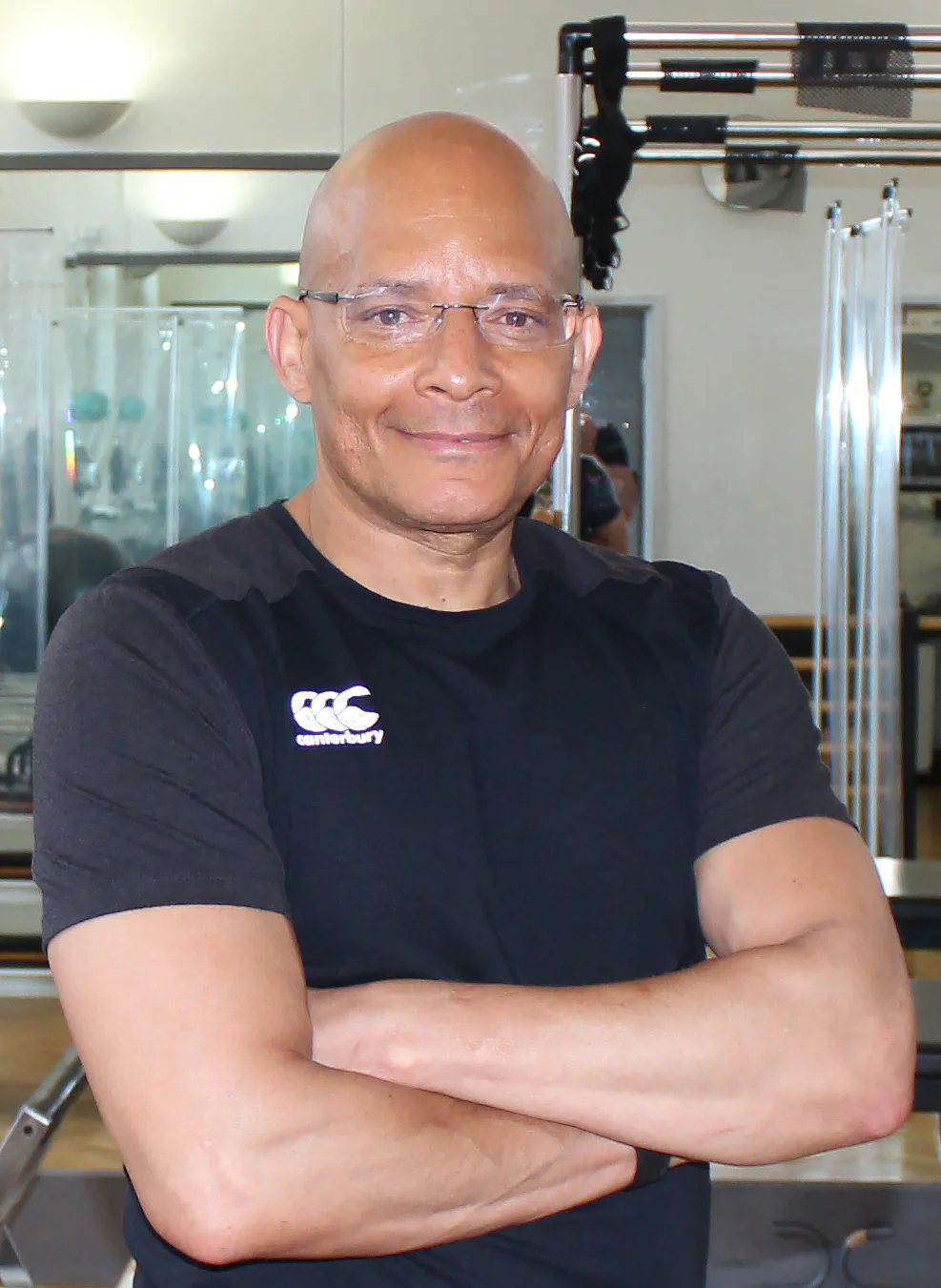
Teejay Sogunro
Founder, The Sogunro Practice · Applied Pilates & Osteolates Therapy · Published 17 Jul 2025 · Updated 27 Jul 2026 · 7 min read

Choosing the right Pilates studio — the questions that matter, from The Sogunro Practice, London Colney, St Albans.
With the generic brand Pilates craze in full swing, the Pilates industry is now populated by instructors with widely varying levels of training — some of whom have little or no understanding of basic anatomy, let alone musculoskeletal pathology. Many instructors genuinely believe they are offering their clients something of great value. But due to gaps in their training, they cannot understand why some clients get good results while others suffer continued or increased symptoms despite every effort to teach them correctly.
If you have a musculoskeletal condition and you’re reading this, it is likely because a doctor or specialist advised you to “do Pilates.” But did they specify which kind of Pilates? Did they advise you to check the instructor’s qualifications? Most people are not aware that a standard Pilates instructor qualification includes no training in rehabilitation or how to apply Pilates exercises for specific spinal or musculoskeletal conditions. A substantial part of the classical Pilates repertoire involves deep spinal flexion — which is contraindicated in disc prolapse and can worsen symptoms.
This article gives you the specific questions to ask, what the answers should look like, and what the current state of Pilates qualifications and regulation in the UK means for anyone choosing a studio for rehabilitation purposes.
The qualification problem
What a standard Pilates qualification actually covers — and what it doesn’t.
The minimum qualification to teach Pilates professionally in the UK is a Level 3 Diploma in Mat Pilates — a CIMSPA-endorsed qualification that covers the history and core principles of Pilates, the complete mat exercise repertoire, and contemporary exercise science. This is the entry-level standard for the fitness industry.
A Level 3 Mat Pilates qualification does not include rehabilitation training. It does not include the clinical knowledge required to understand musculoskeletal pathologies, to modify exercises safely for specific spinal conditions, or to identify which exercises are contraindicated for which presentations. That training exists — but it is additional, specialist, and far less common.
CIMSPA Professional Standards (2025): The Pilates Matwork Instructor Level 3 is the sector minimum deployment standard. CIMSPA has published a position statement on Pilates instructors and training providers (June 2024) and is working with EMD UK on new scopes of practice for Pilates instruction, including separate scopes for Fitness Pilates Mat, Pilates-based Studio Reformer Instructor (Group), Pilates Method Studio Reformer Instructor, and Pilates Mat-based Instructor.
EMD UK guidance on group Reformer class sizes and safety considerations (2025): EMD UK has issued specific guidance on risks unique to Reformer Pilates in group settings, noting that the Reformer “carries one of the highest injury risks of any class on the studio schedule” and that without the right checks this risk increases substantially.
STOTT Pilates Rehabilitation Program: Separately from standard instructor certification, STOTT Pilates offers a Rehabilitation Program specifically designed for licensed physical therapists, chiropractors and sports medicine professionals, requiring a minimum of two years of full-time study in anatomy, physiology, injury prevention and exercise prescription. This is categorically different from a standard Pilates qualification.
The critical gap: A Level 3 Pilates qualification — the standard industry entry point — has no official entry requirements in terms of prior qualifications. It is open to anyone with interest in Pilates. MSK rehabilitation knowledge is not part of the core standard.
“Without the necessary foundation in anatomy, musculoskeletal movement and associated pathologies, the most well-intentioned instructor will be unable to define an appropriate routine for each individual. If your instructor doesn’t understand the clinical nature of a prolapsed disc, sciatica or facet joint syndrome, clearly they won’t understand which exercises will aggravate or worsen your condition.”
The class size problem
Why class size is a safety issue — not just a quality issue.
The Reformer Pilates industry has grown rapidly. Large-format studios running classes of 15–20+ clients on Reformers simultaneously have become common. The problem is that the Reformer was not designed for this format. Joseph Pilates designed the Reformer as part of a system focused on control, precision and progressive training — originally for one-to-one or very small group instruction.
Reformer Pilates injuries are increasing. Reported injuries from Reformer classes include tendon tears, fractures, slipped discs and other serious and debilitating injuries. In 2019 a violinist successfully sued a studio after breaking her elbow on a Coreformer machine and was awarded interim damages of £80,000 for what could have been a career-ending injury. Multiple ongoing legal cases and personal injury claims are being made for similar incidents. The Standard (2025) and Daily Mail (2025) have both reported on this increase.
EMD UK (Feb 2026): “Without the right checks, [Reformer Pilates] also carries one of the highest injury risks of any class on the studio schedule. From spring tension to carriage control, there’s a lot going on under the surface — and a lot that can go wrong without trained supervision.”
Body Control Pilates: “It is impossible for an instructor to keep an eye on what everyone is doing at any given moment in time in such [large] classes, so there is a much-increased risk of accidents and injury.”
Pilatesglossy International (Mar 2025): “With more than three participants in a class, it becomes nearly impossible for a trainer to monitor everyone properly and provide necessary corrections. This significantly increases the risk of dangerous situations and injuries.”
Gill Cummings-Bell, MA, MSc, PGCE (Dec 2024): “In my experience when participant numbers on Reformer increase above 10 in class this isn’t possible [to observe technique properly]. As a very experienced teacher with a great movement diagnostic eye, I struggle with more than 10 on Reformer.”
HFE (Aug 2025): “There is a call for the public to be more aware of the risks in an environment where the focus is on apparatus, and gyms and fitness instructors ‘cutting corners’.” Lewitt and McPherson (2024) note the Reformer “is not another piece of gym kit.”
At The Sogunro Practice, the maximum of 7 clients per session is a hard limit. At 7, every client can be observed, corrected and remembered between sessions. That limit exists because of clinical understanding of the Reformer and MSK rehabilitation — not as a marketing claim.
What effective instruction looks like
Effective instruction is not entertainment. It is the application of the right exercise.
There is a meaningful difference between an instructor who keeps a class engaged, varied and enjoyable — and an instructor who understands which exercises are appropriate for each individual in the room. Both matter. But for someone with a musculoskeletal condition, the second is the clinical requirement.
While it is the role of clinicians to diagnose pathologies, the Pilates instructor is responsible for defining the appropriate exercises and modifications. An instructor who does not understand the clinical nature of a prolapsed disc, sciatica, or facet joint syndrome cannot select exercises that are safe for those conditions. They may teach with the best intentions and still cause harm — because the gap is in knowledge, not in effort.
“Effective instruction is not about delivering an entertaining variety of exercises to maintain client or group interest. It is about the application of the right exercise. Without the necessary foundation in anatomy, musculoskeletal movement and associated pathologies, the most well-intentioned instructor cannot define an appropriate routine for each individual.”
At The Sogunro Practice, the starting point for every new client is a £85 1-to-1 Movement Assessment — a 60-minute one-to-one session that identifies the specific drivers of each client’s issue. Only after that assessment does a programme begin. By the time a client enters a small group session, Teejay already knows how they move, what is driving their pain or limitation, and which exercises are appropriate or contraindicated for them specifically.
The questions to ask
Seven questions to ask any Pilates studio before you start.
These are not questions designed to catch an instructor out. They are the practical minimum for establishing whether a studio is equipped to work safely with someone who has a musculoskeletal condition. Ask them directly. The answers will tell you what you need to know.
How The Sogunro Practice answers these questions
25 years of clinical practice. The full STOTT Pilates apparatus. Maximum 7 clients. Assessment before everything.
Qualifications
STOTT Pilates Full Comprehensive & Rehabilitation Certified. Qualified Sports Therapist. Certified Physio Club Rehab Trainer & Master Rehab Trainer. Studied osteopathy, Middlesex University. Watford FC Rehab Pilates Sports Therapist 2015–2018.
Experience
25 years professional clinical practice. 35 years total experience. Founded 2001. Creator of Osteolates Therapy. 4.9 ★ on Google · 123 reviews. Many clients attending for 10–14 consecutive years.
Class size
Maximum 7 clients per session. Hard limit, not a target. Every client is observed, corrected and known individually throughout the programme.
Assessment
£85 / 60-minute Movement Assessment before any programme begins. Identifies the specific drivers of your condition. No group session until assessment is complete.
About the author
Teejay Sogunro
Founder, The Sogunro Practice · Applied Pilates & Osteolates Therapy, London Colney, St Albans
STOTT Pilates Full Comprehensive and Rehabilitation certified. Qualified Sports Therapist. Certified Physio Club Rehab Trainer & Master Rehab Trainer. Studied osteopathy, Middlesex University. Rehab Pilates Sports Therapist, Watford FC 2015–2018. England Masters squash representative, world ranked over-60s. Founded The Sogunro Practice 2001. Creator, Osteolates Therapy. 25 years professional clinical practice and 35 years total experience.
Related articles & condition guides
Start with the assessment.
Everything else follows from it.
A 60-minute 1-to-1 Movement Assessment with Teejay identifies what is specifically driving your condition. No group session until that is complete. Free parking on site. 2 minutes from M25 J22.
The Sogunro Practice · Applied Pilates & Osteolates Therapy
Unit 5, Hertfordshire Business Centre, Alexander Road
London Colney · St Albans · Hertfordshire · AL2 1JG