

Facet Joint Syndrome · London Colney, St Albans
Repeated flare-ups
of back or neck pain? There's a strategy that actually works.
If you've suffered repeated flare-ups of severe lower back or neck pain for years — and you're desperate for a long-term solution — you may be experiencing Facet Joint Syndrome, one of the most common causes of chronic spinal pain. At The Sogunro Practice in London Colney, we manage it with a combined Osteolates and Applied Pilates approach built for the long term. Ample free parking on site.
Not sure where you fit? Try the two-minute movement self-check →
"I've suffered repeated flare-ups of severe lower back pain for years — and I'm desperate for a long-term solution." If that sounds familiar, there is a structured strategy that works.
Understanding the condition
What is Facet Joint Syndrome?
Facet Joint Syndrome — also called zygapophyseal joint syndrome — is a spinal compression condition. Specifically, it affects the small joints at the back of the spine. As a result, it is one of the most common causes of chronic neck and lower back pain we see in St Albans.
For many people, this becomes a persistent or recurring condition. However, if joint surfaces have become irritated or damaged, Facet Joint Syndrome typically requires a long-term management plan — not a short-term fix. The positive news is that with the right combination of treatment and condition-specific exercise, flare-ups can be significantly reduced and quality of life dramatically improved.
"There is no quick fix for facet joint syndrome — but there is a strategy. We have the clinical experience to guide that process, provided you are prepared to commit to structured rehabilitation."
In particular, one of the most common underlying causes is poor spinal stability resulting from weak deep stabilising muscles. Because of this, treatment has to address both the acute pain and the structural weakness behind it — not just one or the other.
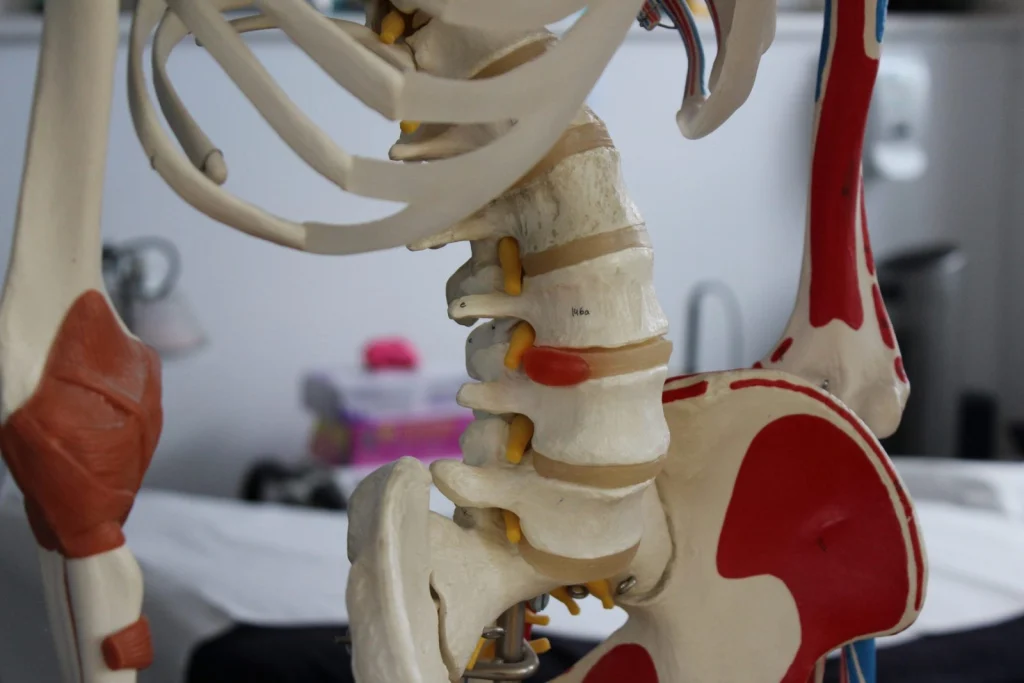
The facet joints — the small paired joints at the back of each vertebra that become compressed or irritated in facet joint syndrome
Common causes of facet joint syndrome
Each cause shapes how the condition is managed long term — which is why a thorough assessment matters before any treatment plan begins.
Recognising the condition
Facet joint syndrome symptoms —
what you may be experiencing
Facet joint syndrome symptoms vary depending on which spinal level is affected. In addition, how long the condition has been present also matters. However, most people experience some combination of the following.
In particular, the pattern of flare-up and partial recovery — rather than constant unchanging pain — is one of the most recognisable features of facet joint syndrome. As a result, many clients describe it as "coming and going" over months or years without ever fully resolving.
Why this becomes a long-term pattern
Many people come to The Sogunro Practice having already experienced years of repeated flare-ups. In particular, each flare-up is often treated in isolation — pain relief, a few sessions of treatment, then discharge once symptoms settle. However, the underlying spinal instability that caused the flare-up in the first place is rarely addressed.
As a result, the cycle repeats. In particular, this is almost always because the deep stabilising muscles that should be protecting the facet joints have never been properly retrained. Therefore, lasting management requires more than treating each flare-up — it requires building the spinal stability that prevents the next one.
Understanding the anatomy
How facet joint syndrome develops —
and why it keeps returning.
The facet (zygapophyseal) joints are small paired joints at the back of each vertebra. They guide spinal movement and bear up to 20% of axial spinal load. When compressed, inflamed or capsule-bruised, they trigger protective muscle spasm — the hallmark of a facet flare-up.
Facet joint syndrome — mechanism & the flare-up cycle
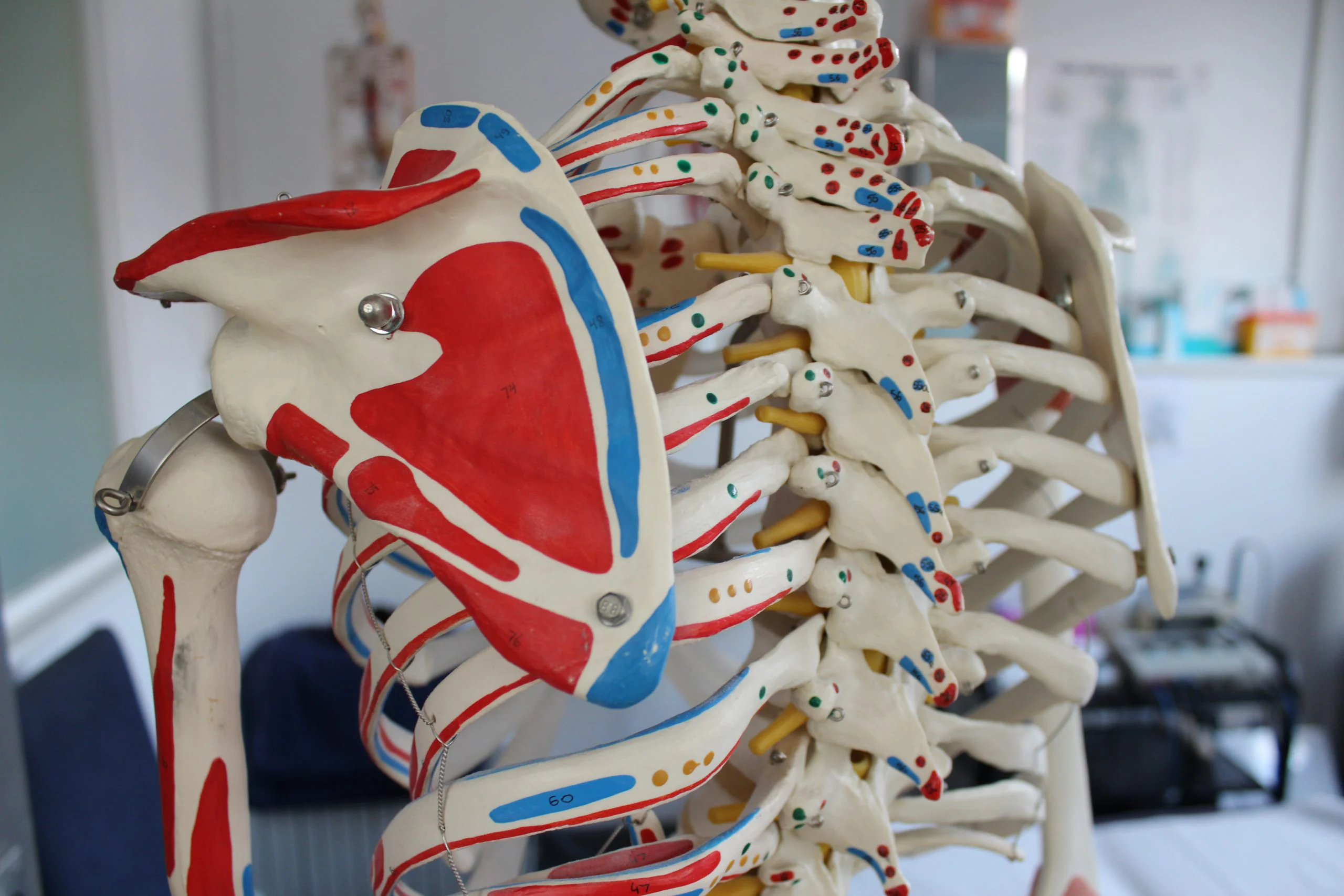
The facet (zygapophyseal) joints are small paired joints at the back of each vertebra. When compressed or capsule-bruised, they trigger a protective spasm cycle that perpetuates the problem. Applied Pilates builds the stabilising strength that prevents the next flare-up. Osteolates Therapy releases the guarding that maintains compression between episodes.
The critical distinction
Why generic Pilates
can make facet joint pain worse
Not all Pilates is appropriate for spinal injury. In particular, many standard mat-based or fitness Pilates exercises — including some reformer classes — can aggravate facet joint compression if they are not clinically modified.

That is why clinical Pilates is essential. At The Sogunro Practice, exercises for facet joint syndrome are individually assessed, clinically selected, carefully modified, and progressed safely. We use only exercises that have been clinically tested for managing facet joint dysfunction — never a generic class plan.
The treatment pathway
A long-term strategy —
not a short-term fix
Facet joint syndrome rarely responds to a single course of treatment. However, with the right structured approach at each stage, flare-ups can be significantly reduced and confidence in your spine restored over time.
Applied Pilates for long-term management
Our condition-specific Applied Pilates focuses on strengthening deep postural stabilisers, reducing excessive spinal compression, correcting muscle imbalances, improving flexibility in tight structures, and restoring balanced movement patterns.
Education & long-term prevention
Understanding your condition is key to controlling it. Therefore, education is built into every consultation. We help you identify whether your issue began with trauma, whether posture or occupational strain is contributing, which daily habits increase spinal compression, and how to manage flare-ups early.
"Our aim is not just pain reduction — but long-term spinal resilience."
Looking for help?
Facet joint syndrome rehabilitation
in London Colney, St Albans
If you are searching for any of the following, our integrated Osteolates and Applied Pilates approach offers a structured, evidence-informed solution.
Client results
What St Albans clients say
about long-term relief
"I had years of flare-ups that nobody could explain. Teejay finally helped me understand why it kept happening — and gave me a plan that actually addressed the cause, not just the pain."
"I have been going to The Sogunro Practice for the past 10 years, doing Applied Pilates twice a week. It makes a huge difference to my overall health, strength and balance."
"After six sessions with Teejay I finally understood what was actually happening in my body. Nobody had explained it like that before — not the physio, not the osteopath, not the chiropractor."
Getting started
Book your initial consultation
Facet joint syndrome requires a tailored, clinically guided plan. Every client begins with an assessment so your plan is built around your specific presentation — never a generic routine.
Why trust Teejay Sogunro with your facet joint pain
Related pages and information
Common questions
Questions about facet joint
syndrome treatment
- Facet joint syndrome affects the small joints at the back of the spine, often aggravated by extension or twisting movements. A prolapsed disc involves disc material compressing a nerve root and frequently causes sciatica — pain radiating down the leg. The two conditions can occur together and sometimes feel similar, but the exercise approach differs. Sciatica treatment guide →
- Yes, if the exercises are not clinically appropriate. Many standard mat-based or fitness Pilates exercises, including some reformer classes, can aggravate facet joint compression. Because of this, every exercise at The Sogunro Practice is individually assessed, clinically selected, and carefully modified before being introduced to your programme.
- This depends on the phase of your condition. During an acute flare-up, sessions are typically more frequent to manage pain and prepare your body for exercise. Once stability is established, occasional maintenance Osteolates sessions — typically every 6 weeks — combined with ongoing Applied Pilates help prevent recurring flare-ups long term.
- Facet joint syndrome typically requires a long-term management plan rather than a one-off cure, particularly if joint surfaces have become irritated or damaged. However, with the right combination of treatment and condition-specific exercise, flare-ups can be significantly reduced and quality of life dramatically improved over time.
- Common causes include sudden trauma such as whiplash, sustained poor posture, weak spinal stabilising muscles, and degenerative changes. In particular, most clients have more than one contributing factor. As part of your initial consultation, we help identify which of these factors are most relevant to your specific case. £85 initial consultation.
- Unit 5, Hertfordshire Business Centre, Alexander Road, London Colney, St Albans, AL2 1JG. Ample free parking on site. 2 minutes from M25 junction 22. 10 minutes from St Albans, Radlett, and Hatfield. Map and full directions →
Stop managing flare-ups.
Start preventing them.
Your £85 initial consultation identifies what is really driving your facet joint flare-ups. Teejay will explain exactly what is happening and give you a clear, structured plan — not just another short-term fix. Ample free parking on site.
The Sogunro Practice · Applied Pilates & Osteolates Therapy
London Colney · St Albans · Hertfordshire · Free parking on site