
Sports Injury Rehabilitation · London Colney, St Albans · Founded 2001

Recovering from a sports injury? Return stronger — not just pain-free.

Returning from injury to “not in pain” is not the same as returning to full performance. At The Sogunro Practice in London Colney, sports injury rehabilitation is led by Teejay Sogunro — Rehab Pilates Sports Therapist for Watford FC’s Premier League first team 2015–2018. The same methods used at elite level are available to every client in St Albans. Ample free parking on site.

Watford FC · Rehab Sports Therapist 2015–18 STOTT Pilates® certified Osteolates Therapy 25 years professional Free parking · M25 J22 England Over-60s Squash Rep
£85
Movement assessmentIdentifies exactly where strength and movement need to be rebuilt
PL
Premier League experienceRehab Pilates Sports Therapist, Watford FC 2015–2018
Top 32
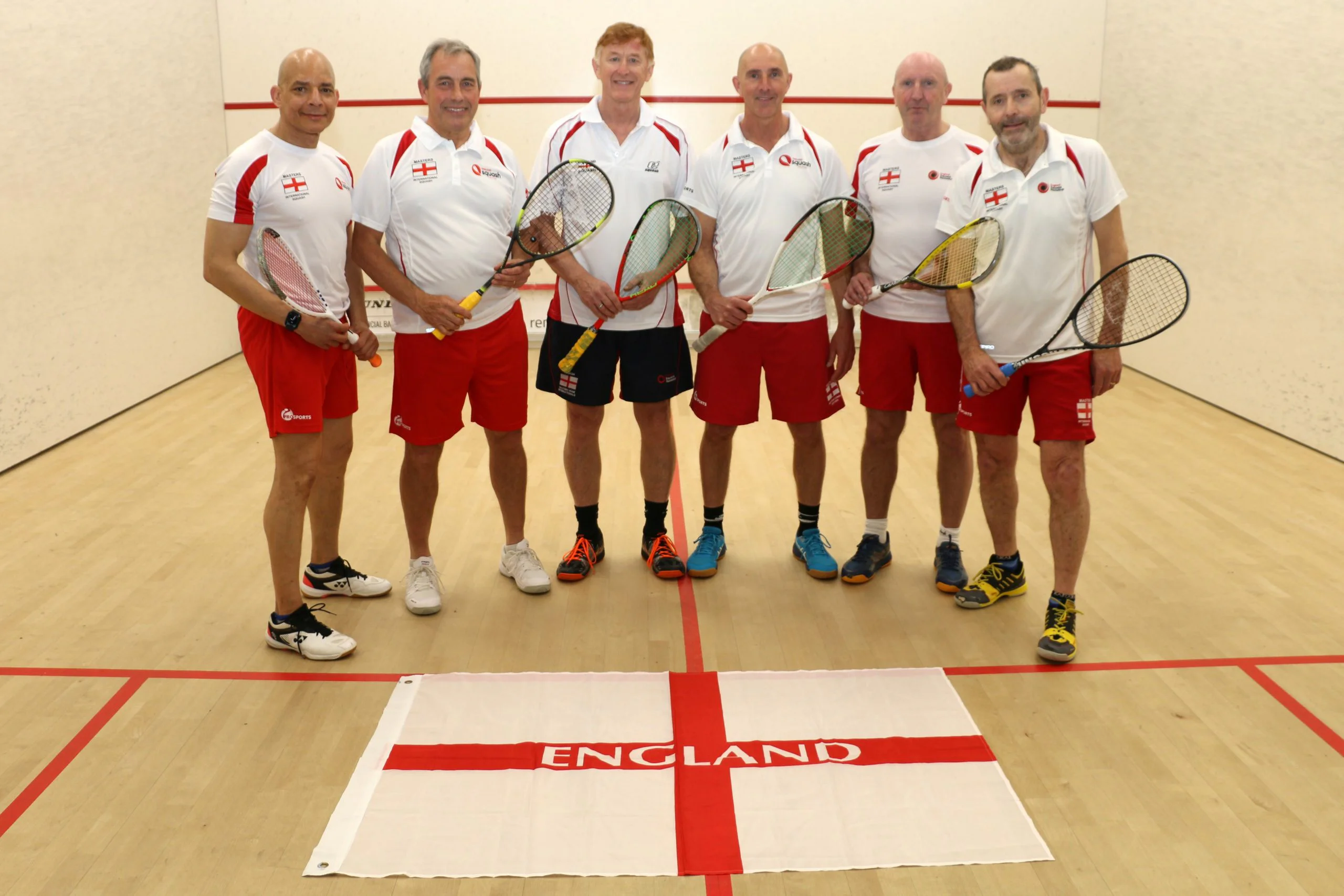
World ranked at 60+England Over-60s Masters Squash Representative 2024
Free
Parking on siteLondon Colney · 2 min M25 J22 · Directions →

"For ten years I lived with the same injuries I now treat. Every specialist stopped once the pain resolved — nobody ever explained why it kept coming back."

Teejay’s Story

Understanding the gap

Why “pain-free” isn’t
the same as “ready.”

Most sports injury treatment stops once the pain has resolved. However, the muscle weakness, movement compensations, and reduced confidence built up during injury often remain. These unresolved deficits are exactly what cause re-injury once you return to sport.

Teejay knows this personally. For 10 years he lived with the same chronic back issues he now treats — visiting chiropractors, physiotherapists, osteopaths and orthopaedic specialists. None of them explained why it kept happening or what was actually causing it. That experience is why he built his professional career around understanding the root cause, not just treating the symptom.

"Healing the tissue gets you out of pain. Rebuilding strength, control and confidence gets you back to performing. For ten years, every specialist I saw stopped at the first one — and never told me why."

Every client’s programme addresses the injury itself and the compensations and weaknesses that developed around it — the part most rehabilitation misses entirely.

Read Teejay’s full story
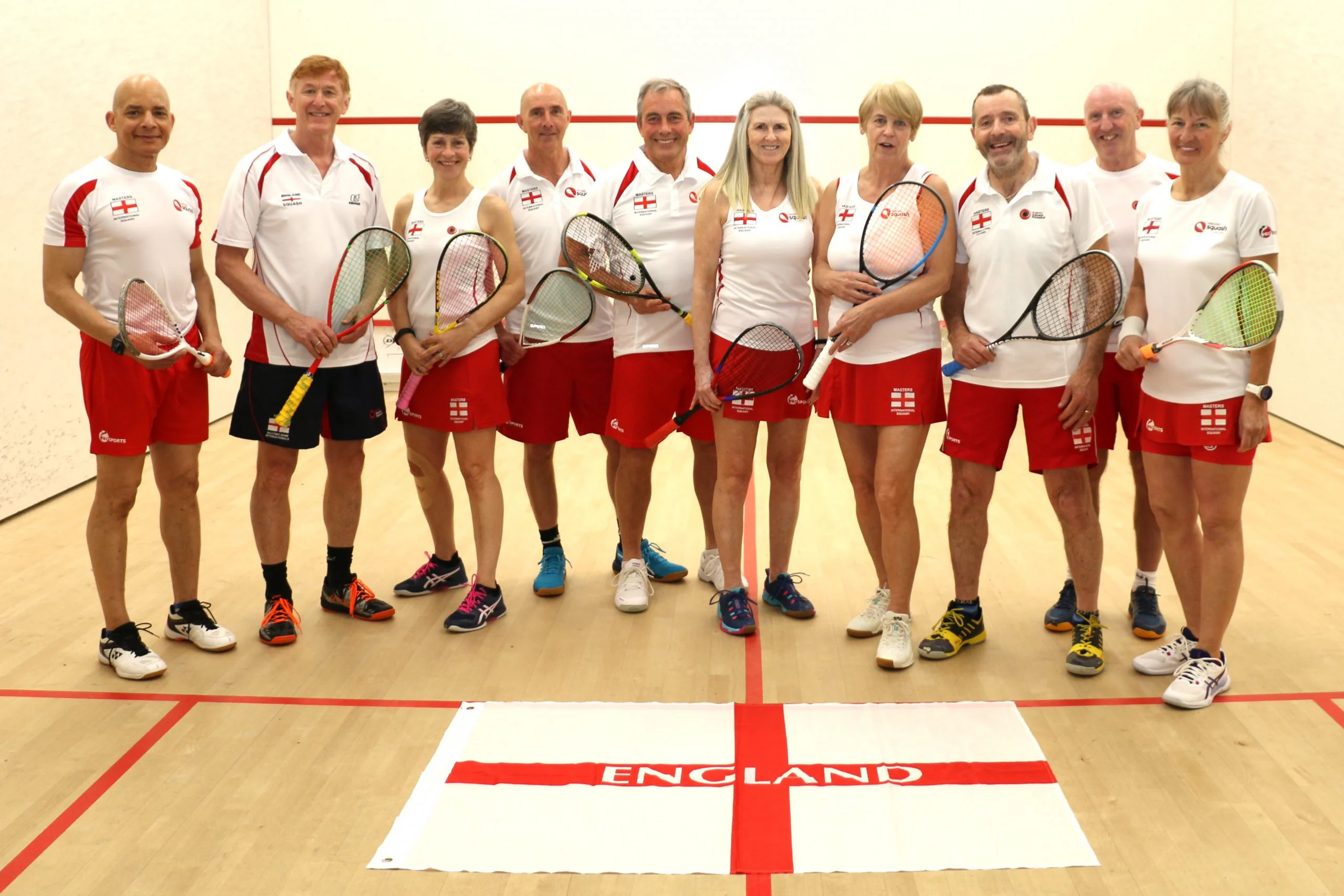
Teejay Sogunro competing at international Over-60s Masters Squash level — England representative, world ranked top 32 in 2024. The same principles he uses in competitive sport are applied to every client's sports injury rehabilitation at The Sogunro Practice, London Colney, St Albans.

Teejay Sogunro competing at international Over-60s Masters Squash level — England representative, world ranked top 32, 2024. The same principles he uses in competitive sport are applied to every client’s rehabilitation at The Sogunro Practice.

Not just recreational athletes. Teejay worked as Rehab Pilates Sports Therapist for Watford FC’s Premier League first team between 2015 and 2018. The same Applied Pilates and rehabilitation methods are applied to every client today, regardless of level. Read Teejay’s full background →

Common sports injuries

Four injury patterns common
in sport — each needing a different approach.

Each injury type requires a different rehabilitation sequence — which is why a thorough assessment matters before any treatment plan begins.

Spinal
Facet joint capsule bruising
Often from impact or sudden rotation in sport, frequently triggering protective muscle spasm. One of the most common and consistently missed causes of recurring back pain after sport. Facet joint page →
Nerve
Sciatic nerve impingement
Often arising from a sporting injury rather than degenerative disc disease. The specific cause (disc, piriformis or SIJ) shapes the rehabilitation protocol — the wrong exercises can worsen it significantly. Sciatica page →
Soft tissue
Glute & QL trigger points
Common in racket sports, running and hockey, frequently driving back, hip and referred leg pain that mimics other conditions. Osteolates Therapy is particularly effective at identifying and treating these patterns. Osteolates Therapy →
Spinal
Pars defect
A stress fracture in the vertebra, common in sports involving repeated hyperextension such as fast bowling, gymnastics and squash. Requires a specific stabilisation-first protocol before any loading exercises are introduced.

Particularly predisposed sports

Golf, tennis, badminton, padel, netball, hockey, CrossFit and HYROX all involve repeated rotation, sudden directional change, or high spinal load — exactly the movements that drive these four injury patterns. If you play one of these sports and have recurring back, hip or leg pain, it is worth getting assessed specifically.

Golf Tennis Badminton Padel Netball Hockey CrossFit HYROX Squash Cricket (fast bowling) Gymnastics Running

Understanding the pathway

Why the return-to-sport pathway
has three distinct stages.

Sports injury rehabilitation is not linear. The final stage cannot be rushed — and skipping it is one of the most common causes of repeated injury.

Return-to-sport pathway — three stages to full performance

Return-to-sport pathway — three stages A horizontal three-stage pathway from left to right. Stage one labelled Early Phase shows Osteolates Therapy for pain management and tissue preparation. Stage two labelled Rebuilding Phase shows Applied Pilates on the full apparatus for strength and movement quality. Stage three labelled Return Phase shows sport-specific power, confidence and match readiness. A red marker labelled Most athletes stop here sits between stages one and two, indicating the common re-injury risk point. An arrow at stage three labelled Return stronger points right. 01 02 03 EARLY PHASE Pain relief & tissue prep Osteolates Therapy
Manage pain, swelling & tissue restriction. Prepare the injured area safely for controlled movement.
REBUILDING PHASE Strength & movement quality Applied Pilates apparatus
Rebuild strength & control. Identify & correct compensations. Precise load on full STOTT apparatus.
RETURN PHASE Power, confidence & match readiness Sport-specific progression
Explosive, multidirectional demands of your sport. Return confident and genuinely match-ready.
Most athletes stop here ↗ Return stronger

Most athletes stop rehabilitating once pain resolves — between stages 1 and 2. Strength, movement compensations and confidence may still be deficient. Returning to sport at this point significantly raises re-injury risk. Stages 2 and 3 are what most rehabilitation misses entirely.

Tested at the highest level

Methods trusted by
Premier League athletes.

Between 2015 and 2018, Teejay worked with Watford FC’s Premier League first team, junior players and match officials on home match days. The same Applied Pilates and rehabilitation methods used at the club are applied to every client at The Sogunro Practice in St Albans — regardless of level.

Teejay also competes internationally himself. He represents England in the Over-60s Masters Squash Team, ranked in the world’s top 32 in 2024. The same strength and movement principles he uses in competitive sport are built into every client’s programme.

Read Teejay’s full sporting background →
PL Premier League Watford FC 2015–2018
Top 32 World ranking Over-60s Masters Squash 2024
England Representative Over-60s International Squash
25+ Years With elite & recreational athletes

Qualifications

STOTT PILATES® Full Comprehensive Certified
STOTT PILATES® Rehabilitation Certified
Qualified Sports Therapist
Trigger Point Dry Needling
Studied BSc (Hons) Osteopathy — Middlesex University
YMCA Qualified Fitness Professional
Registered Healthcare Practitioner — CNHC & CThA

The critical distinction

Why returning too early
leads to re-injury.

Sports injury rehabilitation is not linear. The final stage cannot be rushed — and skipping the load and confidence-building phase is one of the most common causes of repeated injury in recreational and competitive athletes alike.

Returning to sport once pain-free

Pain resolving does not mean strength, control and confidence have fully returned. Returning to sport at this stage — the most common mistake — significantly raises re-injury risk.

Ignoring movement compensations

Injuries cause compensatory movement patterns elsewhere in the body. Without assessment, these patterns go unnoticed and unaddressed — becoming the cause of the next injury.

Skipping load and power training

Sport demands explosive, multidirectional movement. Rehabilitation that stops at gentle exercise leaves you underprepared for the actual demands of competition and match play.

Generic return-to-play timelines

Fixed timelines ignore individual variation in healing and confidence. Progression should be based on what your body demonstrates — not the calendar.

What the assessment finds

The £85 assessment
finds what is still missing.

The movement assessment identifies exactly where strength and movement still need to be rebuilt before return to sport is safe. Every deficit, every compensation, every weak link in the chain — mapped before any exercise is prescribed.

What the £85 assessment identifies

  • The specific injury type and its root cause
  • Which muscles are still weak or inhibited
  • Compensatory patterns developed during injury
  • Whether Osteolates Therapy is needed first
  • A sport-specific rehabilitation plan
  • What stage of return-to-sport you are at
  • A clear plan with no obligation to continue
Book £85 assessment →

Please note: Teejay Sogunro is not a physiotherapist, osteopath, or chiropractor. If under active medical care for an acute injury, please consult your team before booking.

The treatment pathway

A complete return-to-sport
pathway.

Sports injury rehabilitation progresses through clear stages. With the right approach at each one, most clients return not just pain-free — but genuinely ready to perform.

01
Early phase
Pain relief & tissue preparation
Osteolates soft tissue treatment manages pain, swelling and tissue restriction. The injured area is prepared safely for controlled movement. No high-load exercises are introduced at this stage — the sequence matters as much as the treatment itself.
About Osteolates Therapy
02
Rebuilding phase
Controlled strength & movement quality
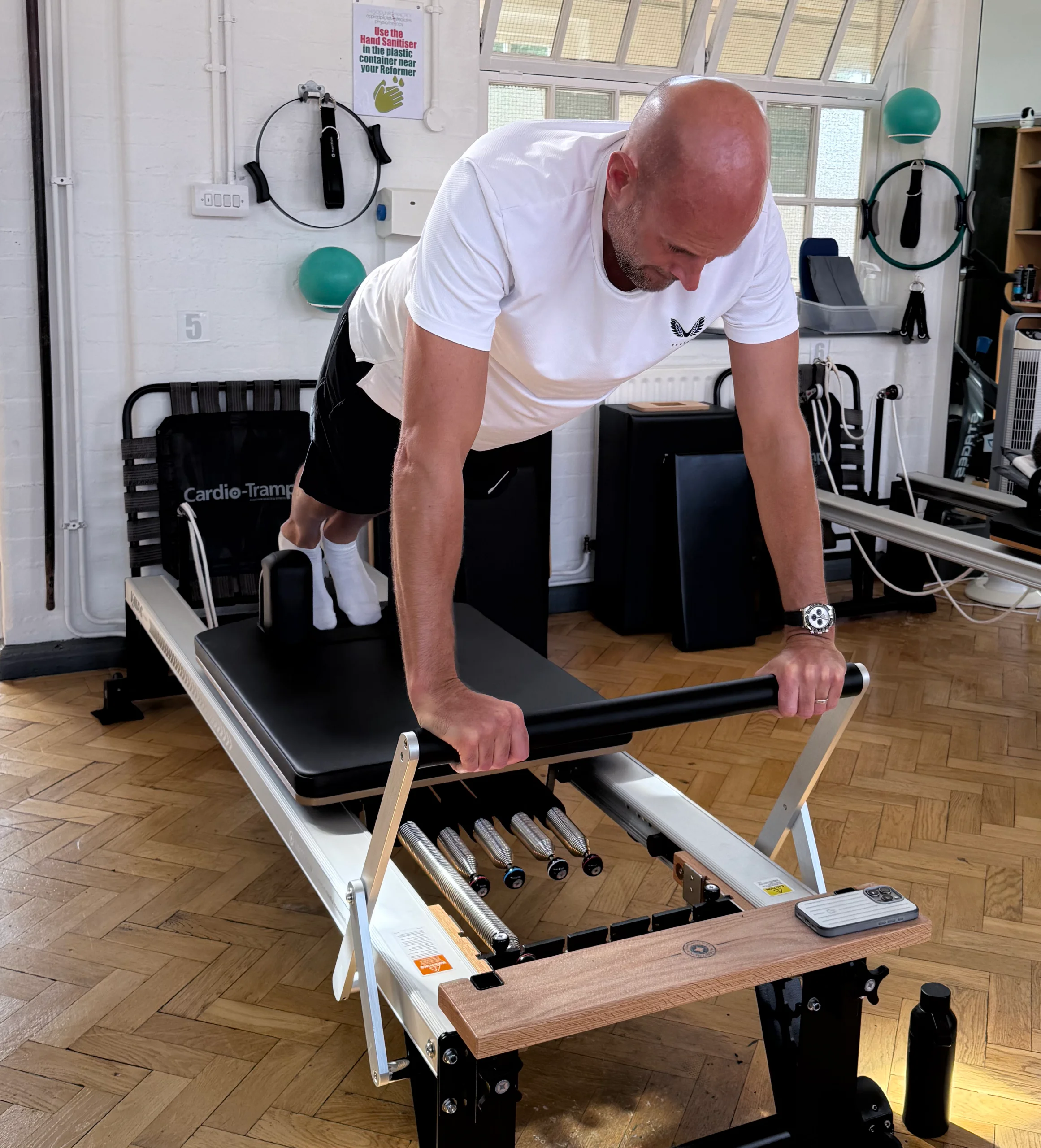
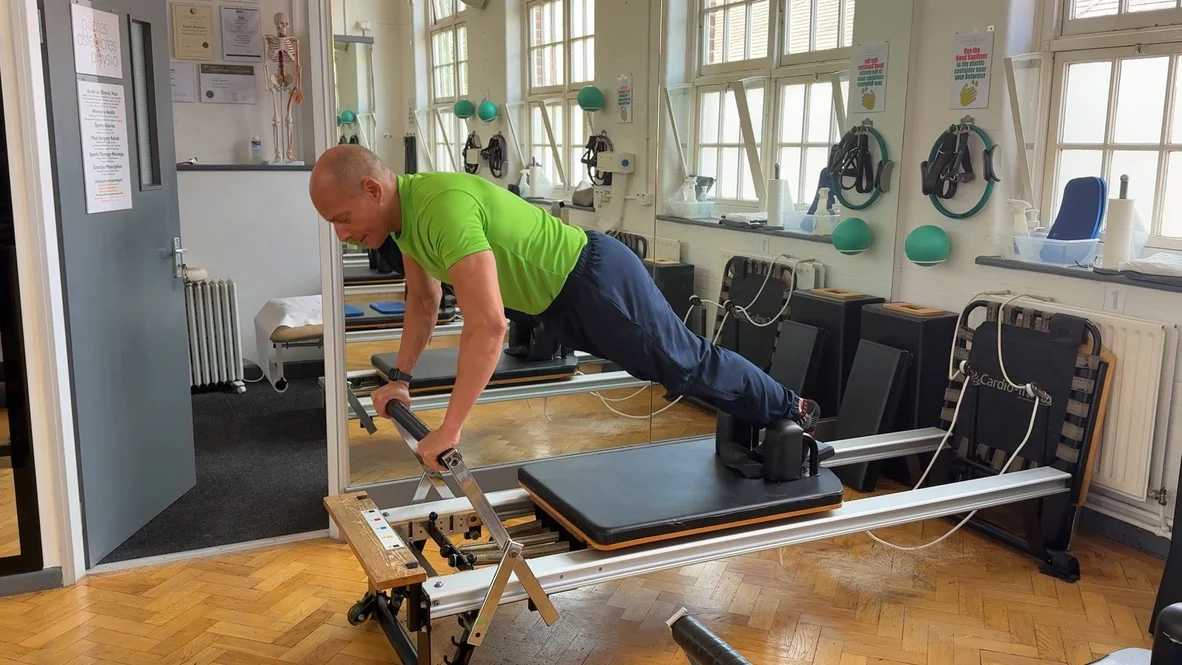
Applied Pilates rebuilds strength and control on the full STOTT apparatus. Load is adjusted precisely, and compensations developed during injury are identified and corrected — not just carried forward into sport. The Cadillac in particular allows decompressive and precise loading unavailable at standard gyms.
Full apparatus studio
03
Return phase
Power, confidence & match readiness
As strength returns, the programme progresses towards the explosive, multidirectional demands of your specific sport. You return not just pain-free, but confident and genuinely match-ready. Most clients then transition to small group membership to maintain performance and prevent recurrence long term.
View membership options
Built from elite experience — the same rehabilitation principles used with Watford FC players between 2015 and 2018 are applied to every client today. Recreational athletes receive the same quality of rehabilitation as elite professionals. Teejay’s full background →
The full STOTT apparatus matters — the Reformer and Cadillac allow load to be adjusted in precise increments, replicating sport-specific demands progressively. This precision is what generic gym equipment cannot offer for rehabilitation. Full apparatus studio →

Client results

What St Albans athletes say about
returning to sport.

★★★★★ Google Reviews · 4.9 from 117 reviews · London Colney, St Albans
★★★★★
Back spasm from squash
“My back kept going into spasm after squash. Teejay identified facet joint bruising nobody else had picked up on and built a programme around it. It hasn’t recurred since.”

— Paul Burrows · Borehamwood

★★★★★
10 years attending
“I have been going to The Sogunro Practice for the past 10 years, doing Applied Pilates twice a week. It makes a huge difference to my overall health, strength and balance.”

— Rachael Chreswick · St Albans

★★★★★
Knee ligament injury
“After my knee injury I was scared to play squash again. Teejay’s programme rebuilt my confidence as well as my strength. I’m playing at my old level now.”

— Greg Taylor · Bushey

Getting started

Three steps to a complete return.

Every client begins the same way — with an honest assessment of exactly where strength and movement need to be rebuilt.

01
Movement Assessment
£85
60 min 1-to-1 with Teejay. We assess strength, movement quality and compensations to build a programme suited to your sport and injury. No obligation to continue.
Book assessment →
02
Osteolates + 1-to-1 Sessions
From £79.83
Osteolates soft tissue treatment alongside personalised 1-to-1 Applied Pilates, rebuilding strength progressively and safely. First block includes complimentary Osteolates Express (£65 value).
View prices →
03
Small Group Membership
From £129/mo
Once full strength and confidence return, small group membership maintains performance and prevents recurrence long term. Maximum 7 clients. No lock-in.
View timetable →

Common questions

Questions about sports injury
rehabilitation in St Albans

  • Yes — certain sports carry a higher risk. Golf, tennis, badminton, padel, netball, hockey, CrossFit and HYROX all involve repeated rotation, sudden directional change, or high spinal load. Players of these sports are particularly predisposed to facet joint capsule bruising, pars defect, sciatic nerve impingement, and glute or QL trigger points. If you play one of these sports and have recurring back, hip or leg pain, it is worth getting it assessed specifically.
  • Yes. Between 2015 and 2018, Teejay worked as Rehab Pilates Sports Therapist for Watford Football Club’s Premier League first team, junior players, and match officials on home match days. The same Applied Pilates and rehabilitation methods used at the club continue to be applied to every client at The Sogunro Practice in St Albans. Read Teejay’s full background →
  • Yes. The same rehabilitation principles used with Premier League players are applied to every client, regardless of level. Whether you play recreational golf, squash, or simply want to return to running without recurring back pain, the assessment and approach are equally thorough. The quality of rehabilitation does not change based on the level of sport.
  • Pain resolving is only the first stage. Strength, movement control, and confidence often take longer to rebuild fully — and returning to sport before they have recovered is one of the most common causes of re-injury. A movement assessment identifies exactly what still needs rebuilding before your body is genuinely ready for the demands of sport.
  • This depends on the injury, its severity, and how your body responds to rehabilitation. Rather than following a generic timeline, progression at The Sogunro Practice is based on what your strength, control and confidence demonstrate at each stage. This individualised approach is safer and often faster than rigid return-to-play schedules.
  • All new clients start with the £85 movement assessment. After that, Osteolates Therapy sessions are from £65, 1-to-1 Applied Pilates from £79.83 per session on the 3-session block, and monthly group membership from £129 per month. Full prices and membership options →
  • Unit 5, Hertfordshire Business Centre, Alexander Road, London Colney, St Albans, AL2 1JG. Ample free parking on site. 2 minutes from M25 junction 22. Approximately 10 minutes from St Albans, Radlett, Hatfield and Harpenden. Map and full directions →
Ready to return stronger?

From rehabilitation
to ready.

Your £85 movement assessment is a 60-minute 1-to-1 with Teejay — the methods trusted at Premier League level, applied to your recovery. He’ll explain exactly what’s needed to get you back to sport with confidence. Ample free parking on site.

Book Your £85 Assessment
Or call Teejay directly 07734 578959

info@thesogunropractice.co.uk

The Sogunro Practice · Applied Pilates & Osteolates Therapy
Unit 5, Hertfordshire Business Centre, Alexander Road
London Colney · St Albans · Hertfordshire · AL2 1JG · Free parking on site

Teejay Sogunro is not a physiotherapist, osteopath, or chiropractor. Applied Pilates, Reformer Pilates and Osteolates Therapy are movement-based and sports therapy rehabilitation services.

>