★★★★★
Post knee surgery“After my knee replacement, Teejay’s rehabilitation programme got me back to walking confidently far quicker than I expected. He understood exactly what stage I was at every time.”
"It is too painful to be touched, but I am told to just rest and wait." That is the phase deep oscillation was designed for.
What it does
Deep oscillation is not massage and it is not vibration. An electrostatic charge is applied through the therapist's gloved hands or a handheld applicator, and the tissue between the applicator and an electrode held by the client is drawn and released many times a second. The oscillation happens inside the tissue rather than being pushed into it from outside.
Because almost no pressure is involved, it can be applied when an area is too painful, too swollen or too recently operated on for conventional hands-on treatment. That is the specific gap it fills here: it gives Teejay something useful to do in the phase where manual therapy would not yet be tolerated, and it runs alongside — never instead of — Osteolates Therapy and rehabilitation exercise.
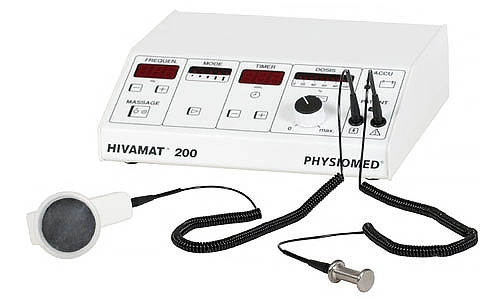
The system used at The Sogunro Practice is the clinical HIVAMAT 200, made by Physiomed Elektromedizin and supplied in the UK by PhysioPod UK. Teejay is a qualified Sports Therapist and STOTT Pilates Rehabilitation certified instructor, and applies it within his own scope of practice — musculoskeletal and post-surgical soft tissue work.
"Deep oscillation is not a shortcut and it is not a cure. It is a way of working on tissue that is not yet ready to be worked on by hand."
If you are already under a surgeon or physiotherapist, deep oscillation is used alongside their guidance, not in place of it. Teejay will work within any restrictions your clinical team has set, and is happy to liaise with them directly.
Where it is used
Deep oscillation is not for every problem or every stage. These are the four situations in which it is worth using at The Sogunro Practice.
Always confirm with your surgical team before beginning any new treatment after an operation.
Evidence
Deep oscillation has a real but uneven evidence base. It is strongest in post-surgical and sports recovery, and weakest in exactly the area this practice is best known for — low back pain. Rather than quietly omit that, here is both sides.
Where deep oscillation sits in a recovery timeline
The timeline above is a guide — your actual progression depends entirely on your specific surgery, your surgeon’s protocol, and how your body responds at each stage. Nothing is advanced until it is genuinely safe to do so.
The critical distinction
Sessions are quiet and undramatic. Most people describe a light pulsing or fluttering sensation and nothing more. There is no heat, no needles and no deep pressure.
The therapist's gloved hands or a handheld applicator move lightly over the area. Nothing is pressed into the tissue, which is why it suits areas that are still painful.
Most clients feel a gentle pulsing and nothing else. Because it is athermal, there is no heat and no sensation of intensity to build up to.
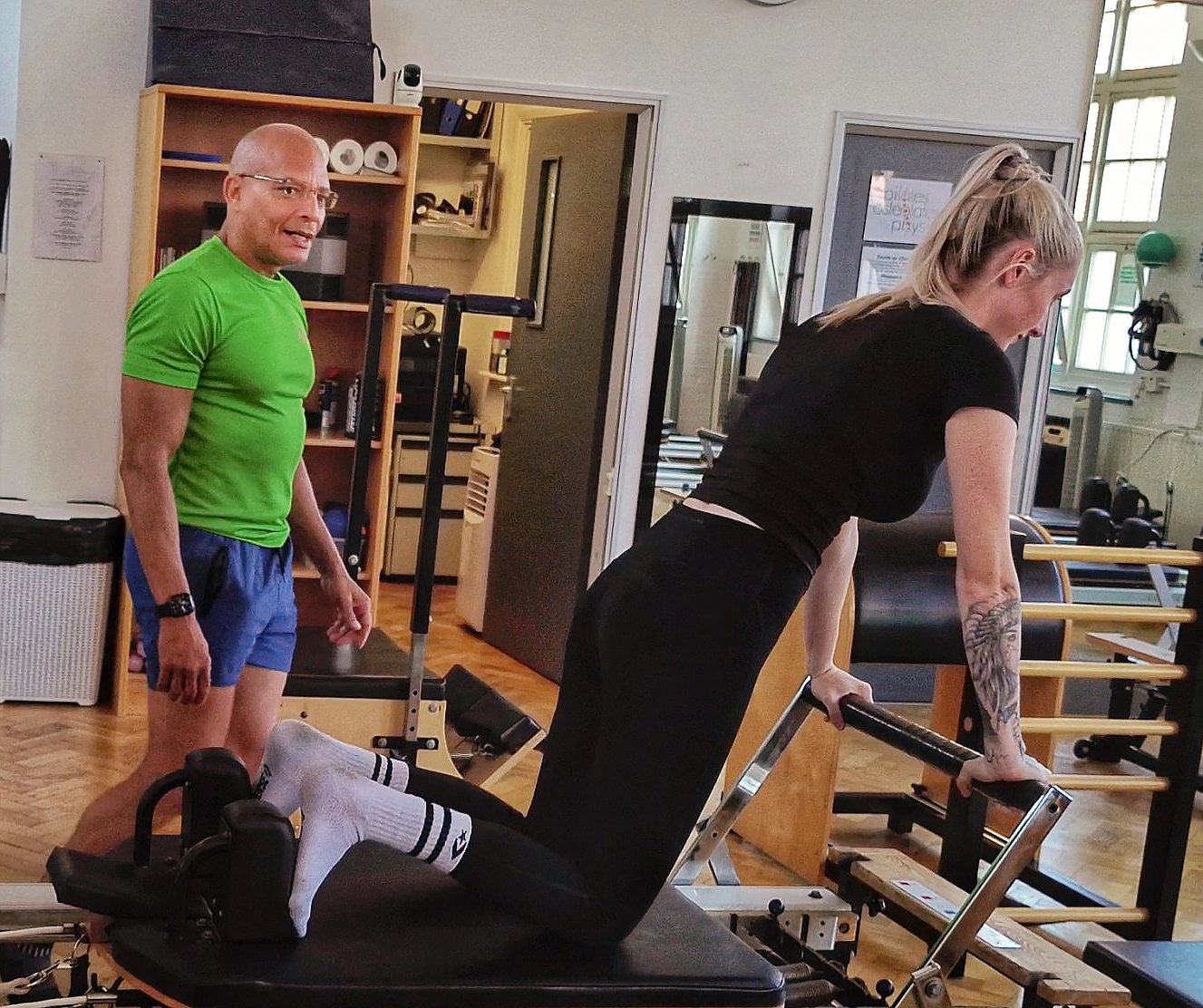
Deep oscillation is used within an Osteolates session as one technique among several, or as a standalone session where hands-on work is not yet appropriate.
As swelling settles and tissue tolerates more, the balance shifts towards hands-on treatment and rehabilitation exercise. Deep oscillation is reduced, not continued indefinitely.
What makes this different
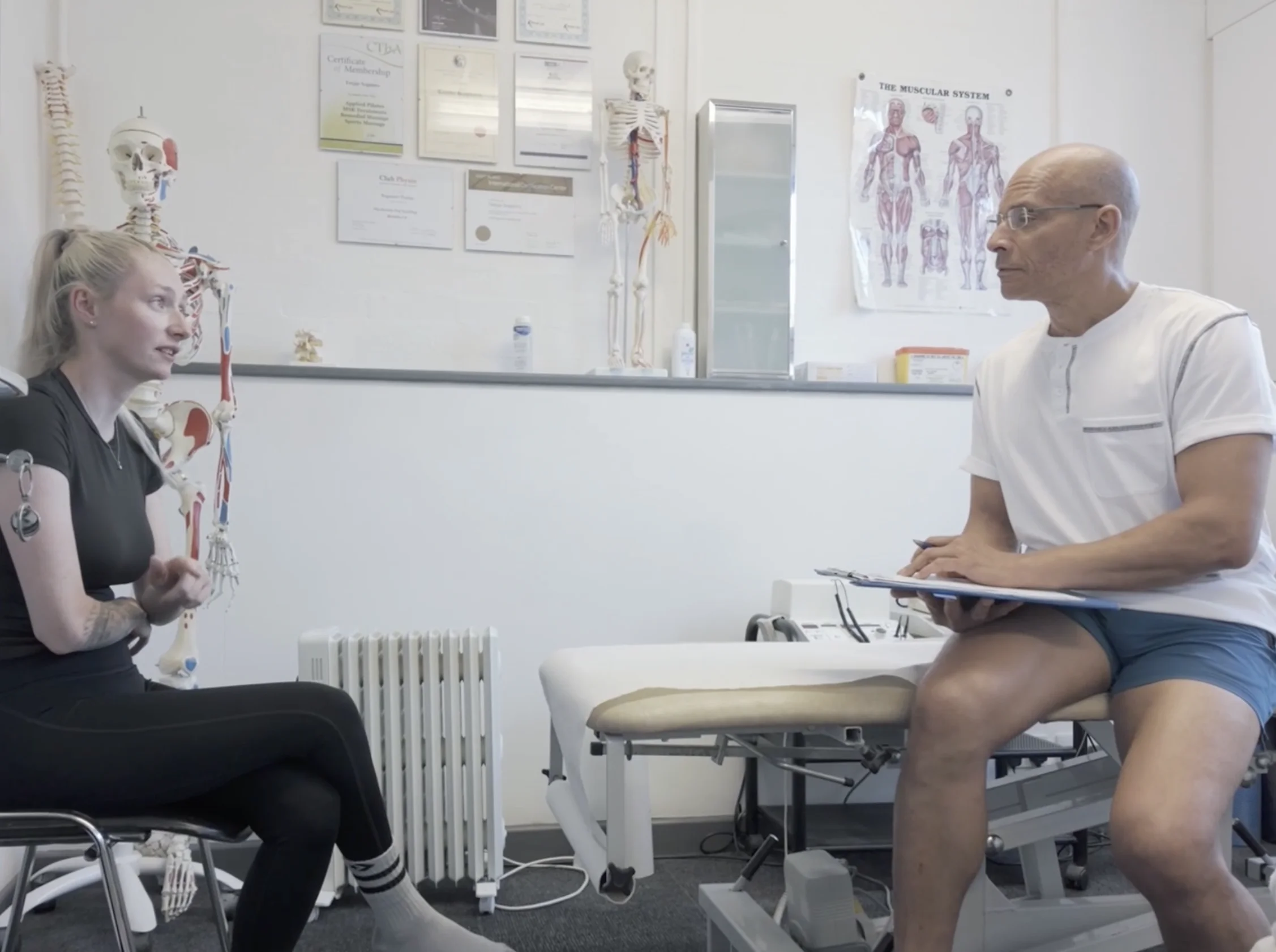
A first deep oscillation session begins with a short assessment of the area, so the treatment is targeted rather than generic.
Your first session covers
The Where it fits
Deep oscillation is a phase tool, not a permanent one. Its value is concentrated in the period when tissue is too reactive for hands-on work, and it tapers off as that changes. If you are already past the swollen, reactive stage, deep oscillation is probably not what you need — and Teejay will tell you so at the first session rather than sell you a course of it.
Client results
“After my knee replacement, Teejay’s rehabilitation programme got me back to walking confidently far quicker than I expected. He understood exactly what stage I was at every time.”
“21 years ago I developed a walking problem after post viral fatigue. I looked like a puppet with a string cut, as I walked in a lopsided fashion. I even secured a disability parking permit. … I started in Oct. 2009, 2X weekly. After 1½ years the interfacet joint pain was history. After another 1½ years, the lopsided puppet could run, jump, skip and dance.”
“I was nervous about doing anything after my back surgery. Teejay worked patiently within exactly what my surgeon advised, and I felt safe every step of the way.”
Getting started
Deep oscillation can be booked on its own, or as part of a session. There is no requirement to commit to a programme.
Why trust Teejay Sogunro with your Deep Oscillation Therapy
Related pages & information
Common questions
Deep oscillation is charged at Osteolates rates — £65 for 30 minutes, £110 for 60 minutes — and no assessment is required to book it. Teejay will explain your plan clearly and work alongside your surgical team’s guidance throughout. Ample free parking on site.
The Sogunro Practice · Applied Pilates & Osteolates Therapy
Unit 5, Hertfordshire Business Centre, Alexander Road
London Colney · St Albans · Hertfordshire · AL2 1JG · Free parking on site