How Pilates can improve your sex life — and the other surprising benefits.
As one of the most popular forms of exercise for the over-50s, Pilates doesn’t just get you physically fit. From pelvic floor function to bone density, here are five evidence-supported benefits that most people don’t expect — and why Applied Pilates delivers them more effectively than generic group classes.
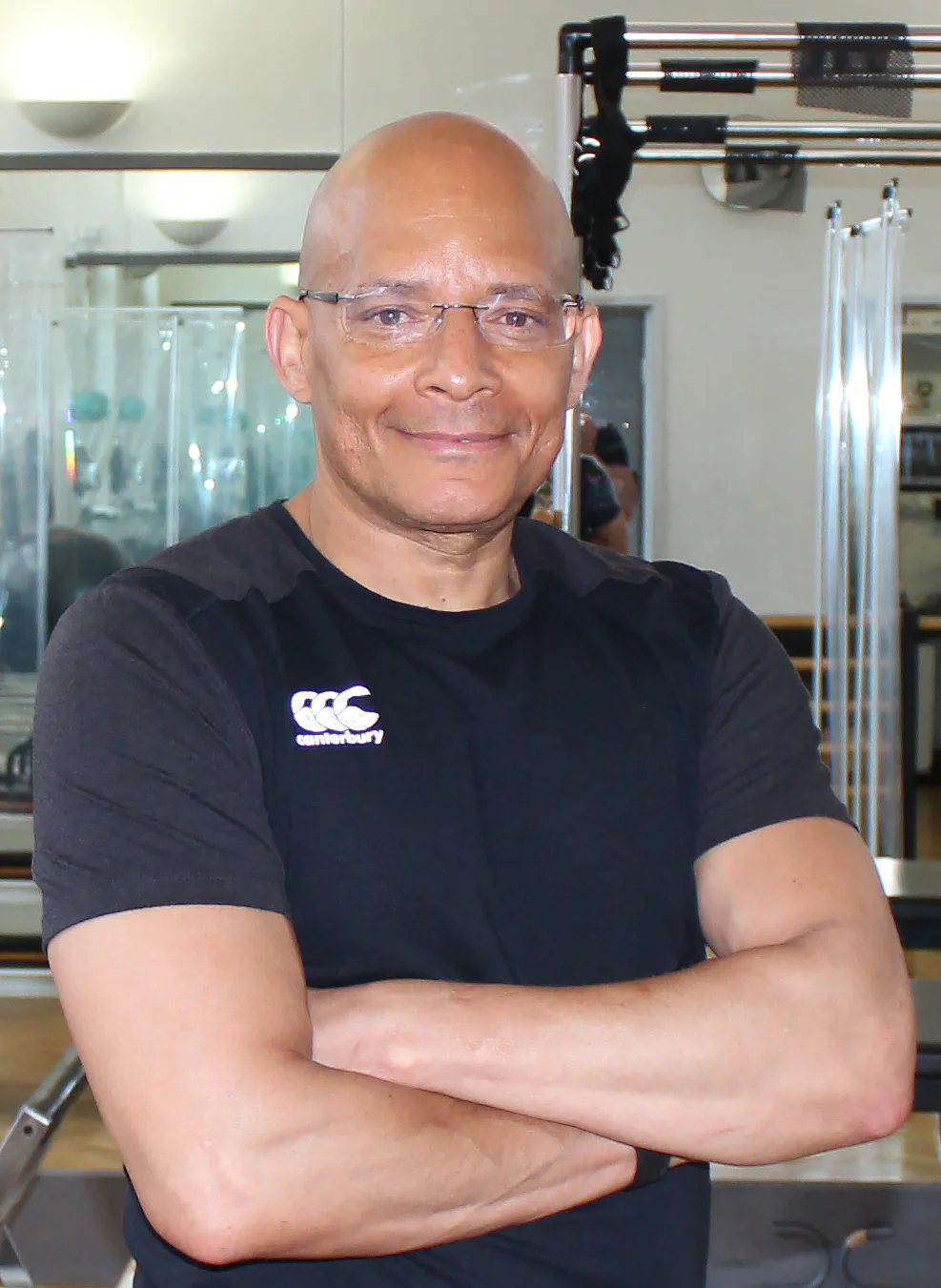
Teejay Sogunro
Founder, The Sogunro Practice · Applied Pilates & Osteolates Therapy · Published 16 Jun 2025 · Updated 27 Jul 2026 · 5 min read

The Sogunro Practice — full STOTT Pilates apparatus studio, London Colney, St Albans. Max 7 clients per session.
Due to its focus on low-impact, controlled movements that enhance flexibility, core strength and balance without stressing the joints, Pilates — whether mat-based or Reformer — is one of the most favoured forms of exercise among the over-50s. It is also increasingly backed by a substantial body of peer-reviewed research.
But beyond the better-known benefits of improved strength, posture and back pain relief, Pilates delivers a range of outcomes that consistently surprise new clients. Pelvic floor strengthening that directly improves sexual function. Balance improvements that reduce fall risk. Mental health benefits comparable to antidepressant exercise. Bone density support that matters long-term.
This article covers five evidence-supported benefits that most people don’t associate with Pilates — and why the quality of instruction and class size determine whether you actually experience them.
Pilates strengthens the pelvic floor — and the evidence on sexual function is compelling.
The pelvic floor is a group of muscles that support the bladder, bowel and uterus. For both men and women, a strong pelvic floor matters significantly as we age — and Pilates is one of the most effective exercises for strengthening it.
The link between pelvic floor strength and sexual function is well established in the research literature. A 2016 study published in the Journal of Sex & Marital Therapy (Halis et al.) found that healthy women who practised Pilates showed measurable improvements in sexual functioning, alongside reductions in depression. A 2025 controlled prospective study published in BMC Urology found statistically significant improvements across all domains of the Female Sexual Function Index (FSFI) after a 12-week Pilates programme, with scores improving substantially compared to controls. A 2023 pilot study in Revista Internacional de Andrología showed FSFI total scores increasing from 12.0 to 29.3 after 12 weeks of Pilates (p<0.0001).
BMC Urology, 2025: Significant improvement in all domains of the FSFI (Female Sexual Function Index) after a 12-week Pilates programme. The study also found undeniable improvements in depression and anxiety scores (ASEX and BDI), confirming the dual psychological and physical benefit.
Journal of Sex & Marital Therapy, 2016 (Halis et al.): Pilates improved sexual function and decreased depression in healthy women, establishing one of the first direct links between Pilates practice and sexual wellbeing.
International Urogynecology Journal, 2024 (Gonzaga et al.): A randomised controlled trial comparing Pilates with pelvic floor muscle training in postmenopausal women found both approaches improved urinary incontinence and pelvic floor endurance, with no significant overall difference between them.
The mechanism works in both directions. Stronger pelvic floor muscles directly improve sexual sensation and function. At the same time, Pilates reduces depression and improves mood — both of which are known suppressors of libido and sexual satisfaction when impaired.
“Everyone talks about core muscles, which surround your spine and core. But if you work on your pelvic floor muscles — which surround the bladder, bowel and uterus — it makes everything stronger and tighter. Pilates works these muscles in a way that provides benefits that will soon become apparent.”
For men: Men also have a pelvic floor, though it works differently. A 2024 study published in BMC Urology found that Pilates combined with pelvic floor muscle training produced statistically significant improvements in post-prostatectomy incontinence. The principles that benefit women’s pelvic health apply equally to men, though the exercise prescription differs.
Pilates supports healthy bone density — with important caveats about how it’s practised.
Over 3 million people in the UK are affected by osteoporosis. By the age of 50, approximately 50% of women and 25% of men will experience the effects of osteoporosis or its precursor, osteopenia. Weight-bearing exercise that applies controlled stress to the bones is one of the most effective non-pharmacological interventions available.
The Reformer’s spring resistance is particularly well suited to bone health work because it allows load to be adjusted in precise increments, providing appropriate bone stimulus without the impact risk of running or jumping. Standing Pilates and resistance-based Reformer work directly stimulate bone maintenance and can help slow density decline.
Healthline, reviewed April 2025: Pilates may help improve strength, balance, function, and mobility in people with osteoporosis. Reformer-based resistance work applies the type of controlled loading that stimulates bone adaptation.
Important nuance: Traditional Pilates exercises involving deep spinal flexion (forward bending) increase vertebral fracture risk in people with low bone density. This is one of the most important reasons why osteoporosis exercise must be specifically modified by a practitioner who understands the condition — not prescribed from a generic class programme.
The Royal Osteoporosis Society describes Pilates as an excellent choice for those living with osteoporosis when correctly practised, noting that a large proportion of the Pilates repertoire includes weight-bearing exercise that helps support bone density and that Pilates effectively reduces fall risk and improves overall quality of life.
Pilates improves balance and reduces fall risk — and the evidence here is robust.
Falls are the leading cause of injury in people over 65 in the UK. Hip fractures from falls carry significant mortality and morbidity risk, particularly in people with osteoporosis. Balance and coordination are trainable — and Pilates is one of the most effective interventions available for both.
Complementary Therapies in Clinical Practice, Nov 2024: A systematic review and meta-analysis found Pilates exercises significantly improve both static and dynamic postural balance in older adults.
PM&R, 2025: A feasibility trial of an 8-week mat Pilates programme in community-dwelling older adults improved core strength and was well tolerated, though the balance differences did not reach statistical significance.
Journal of Bodywork and Movement Therapies, Sep 2025: A 20-week online Pilates programme improved balance, functional fitness, trunk strength and stability in older adults, supporting Pilates as a viable fall prevention strategy even when delivered remotely.
Where the evidence stops: balance itself measurably improves — but the 2024 meta-analysis above found no reliable evidence yet that Pilates reduces the actual number of falls, or the fear of falling. We would rather tell you that than overclaim.
The balance benefits of Pilates are driven by several mechanisms simultaneously: improved core strength providing a stable base, enhanced proprioception (the body’s awareness of its position in space), better peripheral vision awareness from coordination exercises, and reduced compensatory movement patterns that make people more vulnerable to falling.
“My motto is: use it or lose it. As you get older, if you don’t use your body, you will gradually lose the ability to use it properly. Some exercises require a lot of hand-eye coordination, which is vital for improving balance and stopping falls. They work your peripheral vision, helping you become more aware of your surroundings.”
Balance work is integrated into every Applied Pilates programme at The Sogunro Practice — not treated as a separate module for older clients. The full apparatus provides an unmatched range of balance and coordination challenges that progress from supported to freestanding as confidence builds.
The mental health benefits of Pilates are measurable — and growing in the research literature.
While Pilates is not traditionally thought of as a mental health intervention, the evidence base has grown substantially. Multiple systematic reviews now confirm that Pilates produces meaningful improvements in depressive symptoms, anxiety, stress and quality of life — across clinical and healthy populations alike.
International Clinical Psychopharmacology, Mar 2025: A systematic review concluded that Pilates is effective in improving depressive symptoms, particularly when compared to inactivity and when practised for 8–16 weeks.
Sports, Apr 2026 (systematic review and meta-analysis): A meta-analysis of 32 randomised and quasi-experimental trials (N=1,264) found a statistically significant pooled effect of Pilates-based exercise on mental health, psychological well-being and quality of life across clinical and healthy populations (g=0.393, p=0.023).
Healthcare, Mar 2025: An observational study confirmed the effectiveness of Pilates in reducing depression and anxiety, as well as somatisation and risk behaviour for stress-related disorders, in a non-clinical population.
Meta-analysis on depression (Medicine journal): Moderate evidence for Pilates significantly improving depression severity (SMD=−0.73), particularly in female participants across randomised controlled trials.
The mechanism is understood: Pilates releases endorphins through physical activity, requires focused attention that interrupts anxious thought patterns, provides social connection in small group settings, and builds self-efficacy through visible physical progress. The controlled breathing emphasis also directly activates the parasympathetic nervous system, reducing cortisol.
“Pilates is all about you and what your body can handle. As you practice the moves, you gain the confidence to push yourself more — and that confidence spreads to things outside your class. It’s also good for your brain and for switching off from the stresses of life.”
Katie McMullan, advanced physio practitioner in MSK physiotherapy, notes: “There are so many benefits to Pilates including social interaction within classes. The endorphins released from exercise enhance mood and give you a new-found confidence.”
At The Sogunro Practice, the maximum of 7 clients per session is not simply a quality-of-instruction measure — it is also what allows the social dimension of group exercise to function properly. Every person is known by name, history and progress. That continuity has a direct effect on confidence and motivation.
Pilates contributes to weight management — not despite being “gentle”, but because of how it works.
Losing weight is rarely the primary reason people begin Pilates. But it can contribute to meaningful changes in body composition — and the mechanism is more interesting than it first appears.
The common assumption that only high-cardio exercise creates calorie deficit has been increasingly challenged. When performed correctly, Pilates builds muscle mass and improves metabolic rate. The sustained muscular control required — particularly in Reformer exercises — maintains significant muscle activation throughout sessions. The result is genuine calorie expenditure alongside muscle toning, without the joint load that makes high-impact exercise unsustainable for many people.
Healthline (medically reviewed May 2025): Pilates may contribute to weight loss by improving strength, muscle tone and overall body composition. Because of its minimal impact on joints, the likelihood of exercise-related injury is reduced — meaning a Pilates programme can be maintained consistently in a way that high-impact exercise often cannot.
The practical implication: Consistency over time matters more for body composition than any single session. The low injury risk of correctly practised Applied Pilates means clients continue for years — many at The Sogunro Practice have been attending for 10–14 years. That continuity produces results that periodic intense exercise cannot.
It is also worth noting that the confidence improvements described under benefit 4 have a documented relationship with sustained exercise behaviour. People who feel better about their bodies are more likely to maintain their exercise programme. The psychological and physical benefits of Pilates are not separate effects — they reinforce each other over time.
Why this matters for you specifically
None of these benefits are automatic. They depend entirely on how Pilates is practised.
Pelvic floor work only functions if the correct muscles are being activated — which requires an instructor who can see you and correct you. Bone density work is contraindicated if the wrong exercises are used. Balance training requires progressive challenge, not the same routine week after week. Mental health benefits require the consistency that only comes from a programme built around your specific needs.
A class of 20 people, where the instructor cannot observe each client individually, cannot reliably deliver these outcomes. A specialist studio capped at 7 clients, where the instructor knows every person’s body and history, can.
About the author
Teejay Sogunro
Founder, The Sogunro Practice · Applied Pilates & Osteolates Therapy
Teejay Sogunro is a movement and rehabilitation specialist with 25 years of professional clinical practice and 35 years of total experience. He holds STOTT Pilates Full Comprehensive and Rehabilitation certifications, is a Qualified Sports Therapist and Certified Physio Club Rehab Trainer & Master Rehab Trainer, and studied osteopathy at Middlesex University. He served as Rehab Pilates Sports Therapist at Watford FC 2015–2018. He continues to represent England at Masters squash level and is world ranked in the over-60s category. He founded The Sogunro Practice in 2001 and created Osteolates Therapy.
Related condition pages & information
Everything starts with
the £85 assessment.
Teejay identifies what your body actually needs, explains it clearly, and builds a programme around it. No generic routine. No obligation to continue. Free parking on site. 2 minutes from M25 J22.
The Sogunro Practice · Applied Pilates & Osteolates Therapy
Unit 5, Hertfordshire Business Centre, Alexander Road
London Colney · St Albans · Hertfordshire · AL2 1JG