
"Nobody slouches because they’ve forgotten how to sit properly. They slouch because the muscles that should be holding them upright aren’t strong enough to do it."
Understanding the cause
Why “sit up straight”
advice never lasts.
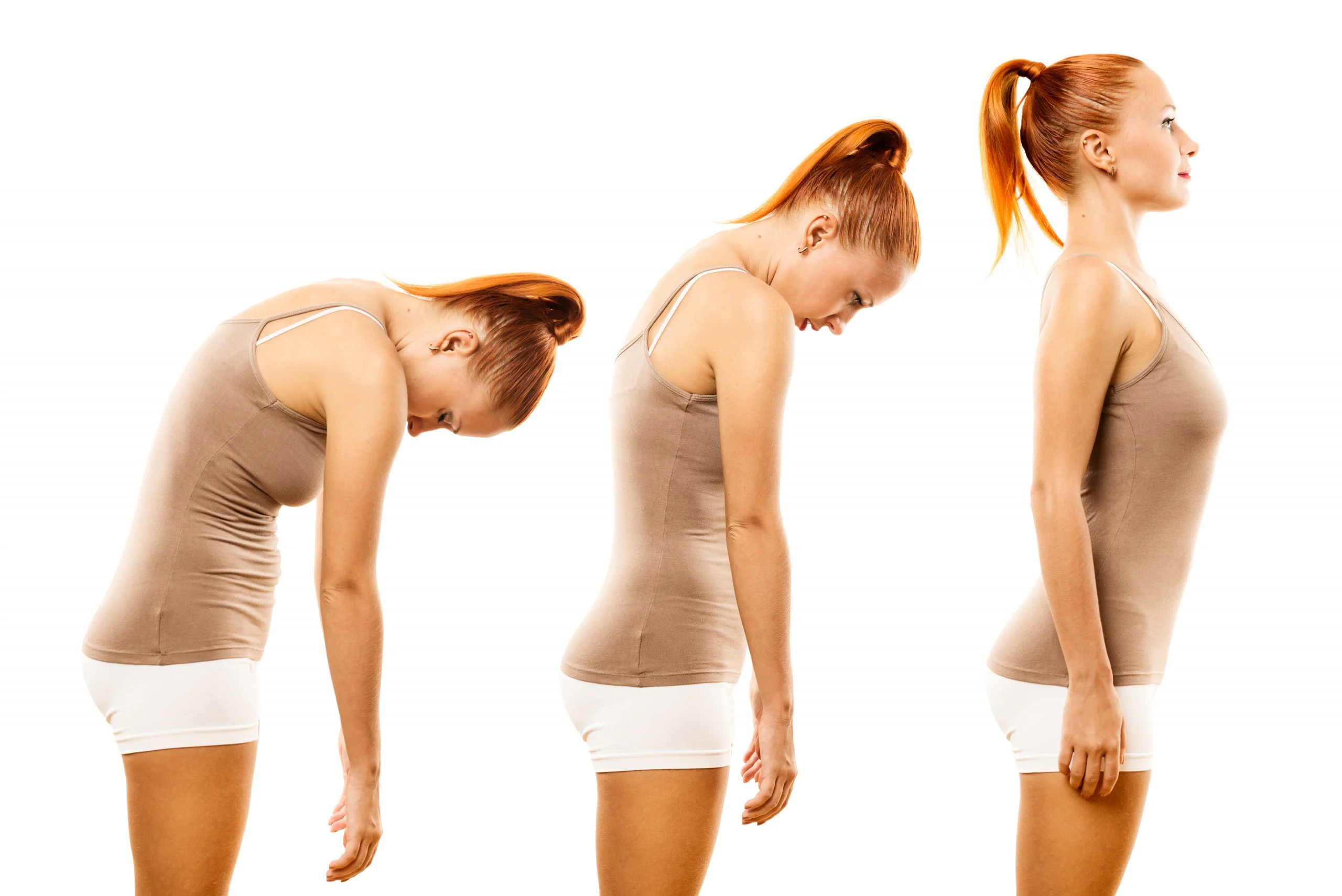
Posture is not primarily a habit — it is a strength issue. Holding good alignment requires the deep stabilising muscles of the core, upper back and hips to be strong enough to do so without conscious effort. When those muscles are weak, the body defaults to a slouched position because it requires less muscular effort.
The slouch returns the moment your attention shifts elsewhere — which is exactly the frustrating cycle most people experience. Apps, reminders and ergonomic chairs raise awareness but do nothing to strengthen the muscles needed to hold good alignment without effort.
"Good posture isn’t something you do. It’s something your body becomes capable of. The correction happens in the muscle — not in the reminder."
Every new client starts with a thorough assessment to identify exactly which muscles need strengthening and which are chronically overactive. The programme then addresses those muscles specifically.
Common patterns
Four postural patterns
we correct in St Albans.
Each pattern has a specific underlying cause — which is why a thorough assessment matters before any exercise begins. What looks like a single posture problem is almost always several muscle imbalances working together.
Understanding the mechanism
What poor posture actually
looks like in the body.
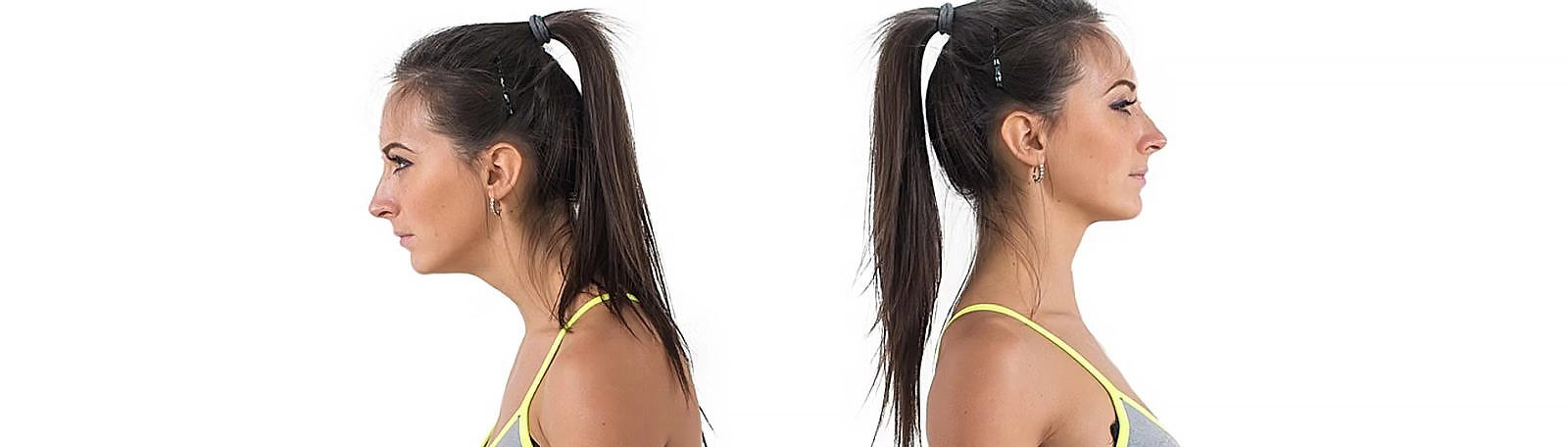
Postural imbalance is always a pattern of tight muscles on one side and weak muscles on the other. The diagram below shows the most common pattern — and why strengthening alone is not enough without first releasing the overactive muscles.
Upper crossed syndrome — the most common postural pattern
Upper crossed syndrome is the most common postural pattern. Tight chest and upper trapezius muscles pull the shoulders forward. Weak deep neck flexors and lower trapezius cannot counteract them. Osteolates Therapy releases the tight side first — then Applied Pilates builds the weak side. Without releasing the tight muscles, strengthening alone cannot overcome their pull.
The critical distinction
Why generic posture
advice doesn’t last.
Most posture advice focuses on awareness — reminders, posture apps, ergonomic chairs. However, awareness alone cannot fix a strength deficit. No amount of reminding a weak muscle to work harder makes it stronger.
Reminders without retraining
Posture reminders and apps raise awareness but do nothing to strengthen the muscles needed to hold good alignment. The slouch returns automatically the moment attention shifts.
Stretching alone
Stretching tight muscles feels good temporarily, but without strengthening the opposing weak muscles, the imbalance simply returns. Both sides of the pattern must be addressed.
Generic core exercises
Standard ab exercises often miss the deep stabilising muscles that actually support posture — training surface muscles instead of the transversus abdominis and multifidus that hold alignment.
Equipment-only fixes
Ergonomic chairs and standing desks reduce strain but do not address the muscle weakness driving the postural pattern. Equipment and targeted exercise work best together — not as alternatives.
Is your posture worth looking into?
Signs your posture is worth
addressing now.
Addressing postural imbalance before it becomes painful is far easier than correcting it after. If several of the following sound familiar, posture correction is likely to help.
Signs worth addressing now
- You catch yourself slouching within minutes of correcting it
- Your shoulders feel like they’re rolling forward
- You feel taller or “more open” after stretching, but it doesn’t last
- Photos show a posture that surprises you compared to how you feel
Signs it’s progressing further
- Mild stiffness or tightness most days, particularly upper back or neck
- Reduced range of movement reaching overhead or turning your head
- Occasional mild discomfort — not yet a “problem” but building
- A sense that your posture has changed gradually but noticeably over years
The treatment pathway
A structured approach to
lasting posture correction.
Posture correction that lasts follows clear stages. With the right approach at each one, the improvement holds without conscious effort.
Client results
What St Albans clients say about
lasting posture improvement.
“I’d tried posture apps and ergonomic chairs for years and nothing actually changed how I stood. Teejay found exactly which muscles were weak and now sitting up straight feels effortless instead of exhausting.”
“I have been going to The Sogunro Practice for the past 10 years, doing Applied Pilates twice a week. It makes a huge difference to my overall health, strength and balance.”
“My shoulders had rolled forward so gradually I hadn’t noticed until a photo shocked me. Within a few months of Applied Pilates, friends started commenting on how much taller I stood.”
Getting started
Three steps to lasting posture.
Every client begins the same way — with an honest assessment of which muscles need strengthening. Everything follows naturally from there.
Why trust Teejay Sogunro with your posture correction
Related pages & information
Common questions
Questions about posture
correction in St Albans
- Because posture is a strength issue, not an awareness issue. Holding good alignment requires deep stabilising muscles to be strong enough to do so without conscious effort. When those muscles are weak, the body defaults to a slouched position because it requires less effort — no matter how many reminders you set. The slouch returns the moment your attention shifts elsewhere. The correction happens in the muscle, not in the reminder.
- Yes — and this is one of the most valuable things we do. Many clients who address postural imbalance early avoid the back, neck and shoulder pain that often follows years of unaddressed strain. Postural muscle weakness doesn’t cause pain immediately — it loads joints gradually until they reach a threshold. Acting before that threshold is genuinely preventative. Shoulder & neck pain page →
- Good equipment reduces the strain on weak muscles — but it doesn’t address the muscle weakness itself. Even with the best ergonomic setup, weak deep stabilisers will still default to a slouched position over time because they lack the strength to maintain alignment. Equipment and targeted exercise work best together, not as alternatives to each other.
- Many clients notice a difference within a few weeks of consistent sessions — posture that previously required effort begins to feel more natural. Building genuinely lasting strength typically takes a few months. The timeline depends on how long the pattern has been present and how weak the underlying muscles are. Because the goal is lasting change rather than a quick fix, consistency matters more than speed.
- All new clients start with the £85 Movement Assessment. After that, Osteolates Therapy sessions are from £65, 1-to-1 Applied Pilates sessions £95 each, or from about £79 per session on the 6-session course, and monthly group membership from £129 per month. Full prices and membership options →
- Unit 5, Hertfordshire Business Centre, Alexander Road, London Colney, St Albans, AL2 1JG. Ample free parking on site. 2 minutes from M25 junction 22. Approximately 10 minutes from St Albans, Harpenden, Radlett, Hatfield and Barnet. Map and full directions →
Stand taller
without trying.
Your £85 Movement Assessment identifies exactly which muscles need strengthening to hold good posture naturally. Teejay will explain your plan clearly and build your strength step by step. Ample free parking on site.
The Sogunro Practice · Applied Pilates & Osteolates Therapy
Unit 5, Hertfordshire Business Centre, Alexander Road
London Colney · St Albans · Hertfordshire · AL2 1JG · Free parking on site